






What's Happening?
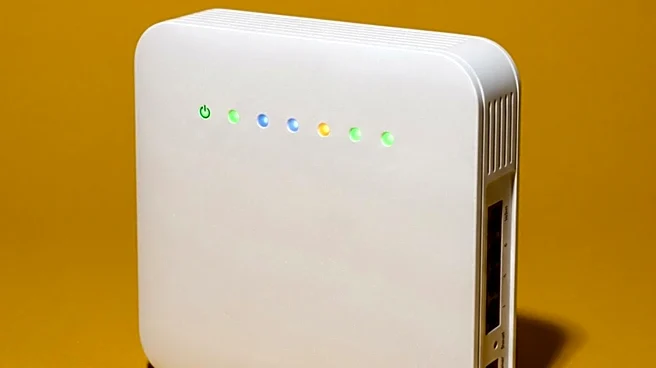
A variety of new Bluetooth hubs and gateways are entering the market, designed to improve smart home connectivity and extend the range of Bluetooth Low Energy (BLE) devices. These include brand-specific hubs like the SwitchBot Hub 3, SwitchBot Hub Mini,
and Govee Gateway, which primarily support their respective ecosystems. Additionally, Home Assistant Bluetooth proxies, such as the M5Stack ATOM Lite and ESP32-S3 PoE Ethernet Board, offer multi-brand compatibility by forwarding BLE device data to Home Assistant over Wi-Fi or Ethernet. The SwitchBot Hub 3, for instance, acts as a command center with an IPS status screen, while the Hub Mini is often bundled with temperature and humidity meters for remote monitoring. Govee's gateways are designed to work with their sensors, providing remote alerts and cloud history. These devices aim to overcome the limited range of BLE devices by relaying their signals over a broader network.
Why It's Important?
The proliferation of these new Bluetooth hubs and gateways is critical for the expansion and reliability of smart home systems. BLE devices, while energy-efficient, typically have a limited range, restricting their utility. These hubs and gateways bridge this gap, allowing users to monitor and control devices remotely, receive alerts, and integrate them into broader automation routines. For consumers, this means greater flexibility in device placement and more comprehensive home coverage. For the smart home industry, the development of multi-brand compatible proxies, particularly those integrated with Home Assistant, signifies a move towards more open and interoperable ecosystems, reducing reliance on single-brand solutions. This trend can foster innovation and competition, ultimately benefiting users by offering more choice and seamless integration of diverse smart devices.
What's Next?
The continued development and adoption of these Bluetooth hubs and gateways are expected to drive further growth in the smart home market. Consumers will likely see more integrated solutions that combine various functionalities, such as IR blasters, built-in climate sensors, and Matter bridging. The emphasis on Home Assistant proxies, especially Ethernet-connected ones, suggests a future where reliability and local control are prioritized, offering users more privacy and functionality during internet outages. Manufacturers will likely continue to refine their hub offerings, focusing on ease of setup, broader compatibility, and enhanced features. The increasing demand for full-house BLE coverage may also lead to more affordable and scalable proxy solutions, making advanced smart home capabilities accessible to a wider audience.
Beyond the Headlines
The evolution of Bluetooth hubs and gateways points to a deeper shift in how smart homes are conceptualized and managed. The move towards multi-brand compatibility and open-source platforms like Home Assistant challenges the traditional walled-garden approach of many smart home ecosystems. This could empower users with greater control over their data and device choices, fostering a more democratic and customizable smart home experience. The technical considerations, such as the shared 2.4 GHz radio for Wi-Fi and Bluetooth in ESP32 devices, highlight the ongoing engineering challenges in optimizing wireless communication for smart home applications. As these technologies mature, we may see more sophisticated solutions that dynamically manage radio resources, leading to even more reliable and efficient smart home networks. This trend also underscores the growing importance of robust network infrastructure in supporting the increasing number of connected devices in modern homes.