





What's Happening?
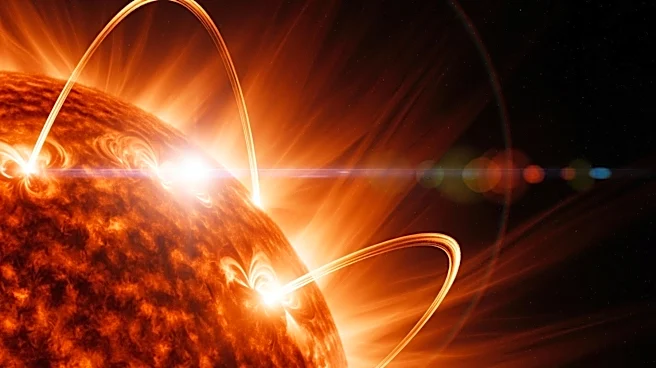
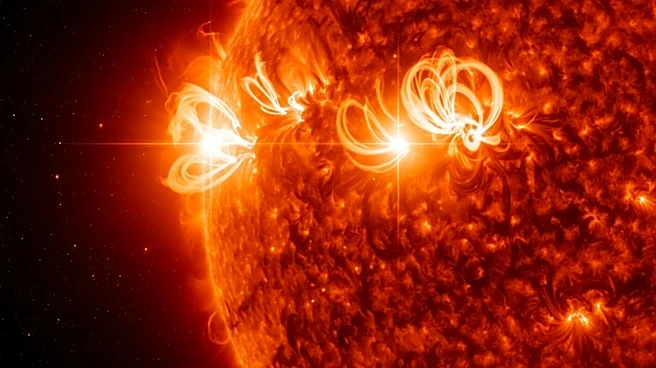
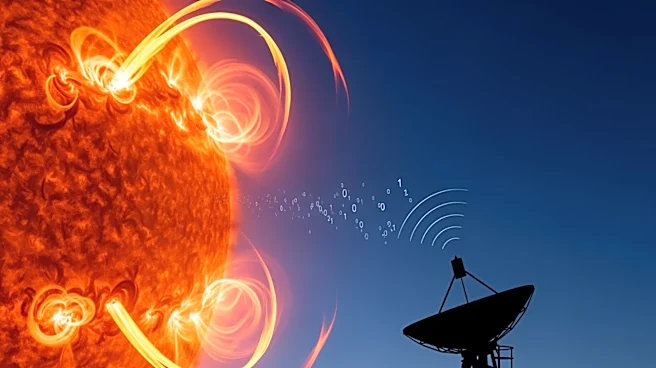
The Sun has recently emitted two powerful X-class solar flares on April 23 and 24, 2026, causing significant disruptions in radio communications across the Pacific and East Asia. These solar flares, classified as X2.4 and X2.5, are among the strongest
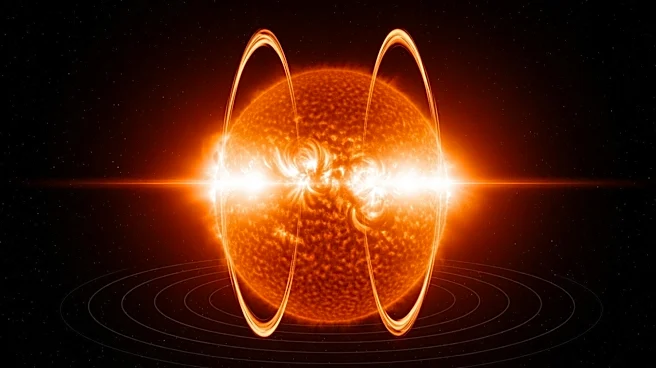
recorded in nearly three months. The flares have raised alerts among space weather agencies in North America, particularly in Canada, where the potential impact on power grids is a major concern. The solar flares were captured by NASA’s Solar Dynamics Observatory, and they originated from a sunspot region on the Sun’s western limb, known as AR4419. This region has been active, producing multiple flares, including a rare 'sympathetic flare'. The flares have caused temporary radio blackouts and have the potential to induce geomagnetic currents in Earth's power grids, which could lead to blackouts.
Why It's Important?
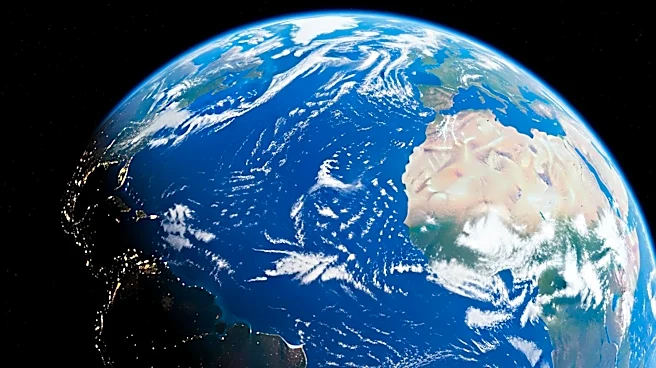
The significance of these solar flares lies in their potential to disrupt critical infrastructure. In Canada, the geomagnetic currents induced by such solar storms can overload transformers, leading to power outages. This is particularly concerning given Canada's history with solar storms, such as the 1989 Quebec blackout caused by a severe geomagnetic storm. The current solar activity highlights the vulnerability of Canada's power grid, especially in regions with long transmission lines and high ground resistivity. Additionally, the flares pose risks to satellite operations, aviation, and GPS-dependent industries, which are crucial for Canada's remote communities and resource sectors. The heightened solar activity is part of the ongoing Solar Cycle 25, which is expected to continue, increasing the likelihood of further disruptions.
What's Next?
While the current solar flares are not expected to directly hit Earth, there is a possibility of a glancing blow from associated coronal mass ejections (CMEs). Space weather agencies are monitoring the situation closely, with forecasts indicating unsettled-to-active conditions and a chance of a minor geomagnetic storm around April 26. Canadians, particularly those in higher latitudes, may witness aurora displays as a result of these disturbances. The ongoing solar maximum phase of Solar Cycle 25 suggests that elevated solar activity will persist, necessitating continued vigilance from space weather agencies and infrastructure operators to mitigate potential impacts.
Beyond the Headlines
The broader implications of these solar flares extend to the need for enhanced preparedness and resilience in infrastructure. The events underscore the importance of investing in grid hardening and developing robust space weather forecasting capabilities. As solar activity remains high, understanding and mitigating the risks associated with geomagnetic storms become increasingly critical for ensuring the stability of power grids and communication systems. The situation also highlights the interconnectedness of global infrastructure, as disruptions in one region can have cascading effects on international operations and services.