



What's Happening?
James Heenan, head of the UN human rights office (OHCHR) in Seoul, reports that despite internal changes such as factory and hospital construction, smartphone adoption, and new laws, the Democratic People’s Republic of Korea (DPRK) is more isolated from
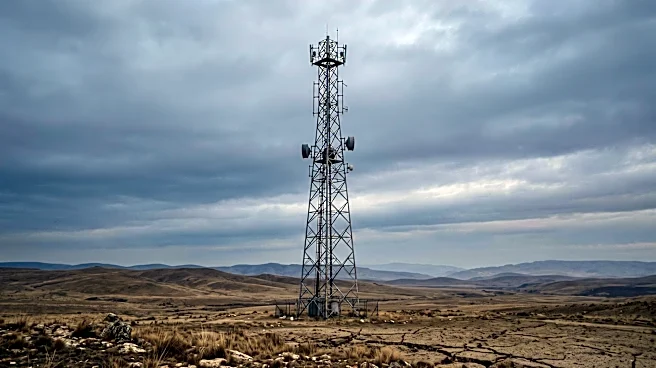
the outside world than ever before. Heenan's team monitors the DPRK from outside its borders due to a lack of direct access, relying on direct witnesses, government information, and satellite imagery. The report highlights persistent issues of hunger, forced labor affecting every family, and a tightly sealed border with China that has virtually halted illegal crossings. While the country is undergoing changes, including economic development initiatives like the '20-by-10 project' for factory construction and increased hospital building, the impact on the general population remains largely unverified due to the lack of external access. Digital technology, such as 3G telephone masts and smartphones, is present but operates within a restricted environment without internet access, raising concerns about increased surveillance.
Why It's Important?
The deepening isolation of DPR Korea, as reported by the UN human rights official, has profound implications for international human rights efforts and regional stability. The lack of access for humanitarian organizations means that the international community cannot effectively respond to disasters or provide essential aid, leading to severe consequences for the population, including potential starvation and limited access to medicine. The pervasive forced labor and hunger described in the report underscore a dire humanitarian crisis that continues largely unchecked. For the U.S. and its allies, this situation presents a persistent challenge in terms of foreign policy, as the regime's isolation makes diplomatic engagement and humanitarian intervention exceedingly difficult. The use of technology for surveillance rather than open communication also highlights the regime's control over information, further entrenching its authoritarian rule and limiting the potential for internal change. The ongoing separation of families between DPRK and South Korea, a long-standing humanitarian issue, continues to be a significant concern for international advocacy groups.
What's Next?
The UN human rights office will continue to monitor the situation in DPR Korea from outside its borders, relying on available information sources. Advocacy efforts will likely persist to push for greater access for humanitarian organizations and to address human rights concerns, particularly regarding forced labor, hunger, and the reunification of separated families. The international community, including the U.S., will likely maintain sanctions and diplomatic pressure on the DPRK to encourage more open engagement and adherence to international human rights standards. However, given the country's extreme isolation, significant immediate changes are unlikely. The report suggests that while the DPRK engages with the UN on human rights issues, the practical impact of this engagement is limited by the lack of transparency and access. Future developments will depend on potential shifts in the DPRK's internal policies or external pressures that could lead to a relaxation of its borders and greater international cooperation.
Beyond the Headlines
The situation in DPR Korea, as detailed by the UN official, illustrates the complex interplay between national sovereignty, human rights, and international intervention. The regime's ability to maintain such extreme isolation, even in an interconnected world, raises fundamental questions about the effectiveness of international norms and institutions when confronted with a determined authoritarian state. The report also highlights the dual nature of technological advancement; while smartphones and mobile banking offer convenience, their deployment within a restricted, surveilled environment can further entrench state control. This case serves as a stark reminder of the challenges in promoting human rights and humanitarian aid in contexts where access is denied and information is tightly controlled. The long-term implications include the potential for continued regional instability and the perpetuation of severe human rights abuses, underscoring the need for innovative approaches to engagement and monitoring.