



What's Happening?
U.S. reservoirs are experiencing a substantial loss of water storage capacity due to the accumulation of sediment, a problem exacerbated by climate change. Wildfires destroy vegetation that holds soil in place, and subsequent extreme rainfall washes torrents
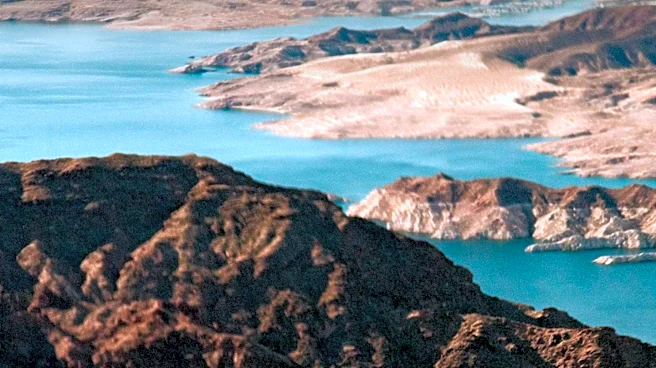
of sand, silt, and mud into these vital water bodies. For instance, Strontia Springs Reservoir in Colorado has lost nearly one-fifth of its capacity to sediment. This issue is widespread, with almost half of U.S. reservoirs being more than one-quarter full of sediment. The average U.S. dam is approximately 64 years old, and the sediment buildup, which engineers anticipated, is now reaching critical levels. The problem is particularly acute in the American West, where drought conditions are intensifying, leading to record low water levels in major reservoirs like those on the Colorado River. This reduction in storage capacity occurs precisely when water officials need to stockpile water to mitigate longer dry spells, creating a significant challenge for water management and supply.
Why It's Important?
The diminishing capacity of U.S. reservoirs has profound implications for water supply, agriculture, and the economy. With less water storage, regions already prone to drought, particularly in the American West, face increased water scarcity. This directly impacts agricultural practices, as farmers rely heavily on reservoir water for irrigation. Reduced irrigation allotments can lead to significant agricultural losses, as evidenced by the tens of millions of dollars in losses at the county level due to even small reductions in water flow. The financial burden extends to farmers who may need to pump more groundwater, increasing operational costs, and to consumers through higher food prices due to increased crop and livestock insurance costs. Furthermore, the sediment buildup can compromise critical infrastructure, such as hydroelectric facilities, potentially leading to power outages if sediment blocks intakes. The long-term sustainability of water resources and the economic stability of agricultural communities are at risk, highlighting the urgent need for effective sediment management strategies.
What's Next?
Addressing the widespread sediment problem in U.S. reservoirs will require significant investment and coordinated efforts. Water utilities and federal agencies are exploring various methods, including dredging and flushing, though both present considerable challenges. Dredging is expensive, and the disposal of potentially toxic sediment requires complex permitting. Flushing sediment by releasing large volumes of water is often not feasible due to current low water levels. There is a growing push for more comprehensive data collection, with the Army Corps of Engineers developing a database for sediment statistics. Experts like Tim Randle are advocating for a consistent national policy for long-term sustainable reservoir management and thorough exit strategies for dam decommissioning, including cost estimates. However, these solutions face financial constraints, as there is only a limited amount of funding available. The U.S. Geological Survey predicts that by 2041, wildfires will double sediment accumulation in over one-third of U.S. watersheds, indicating that the problem is expected to worsen, necessitating proactive and innovative approaches.
Beyond the Headlines
The issue of sediment accumulation in U.S. reservoirs extends beyond immediate water supply concerns, touching upon broader environmental, economic, and policy dimensions. The problem underscores the interconnectedness of climate change impacts, as increased wildfires and extreme rainfall directly contribute to erosion and sediment runoff. This highlights a critical feedback loop where climate change exacerbates environmental degradation, which in turn further strains essential resources. Ethically, the challenge raises questions about intergenerational equity, as current decisions (or lack thereof) regarding reservoir maintenance will significantly affect future generations' access to water. Legally, the complexity of managing sediment, including disposal permits and the varying ownership of smaller reservoirs, points to potential regulatory gaps and the need for streamlined, comprehensive frameworks. Culturally, the reliance on large-scale dam infrastructure, once seen as symbols of progress, is now revealing its long-term vulnerabilities, prompting a reevaluation of water management philosophies and potentially shifting towards more decentralized or nature-based solutions to enhance resilience.