
What's Happening?
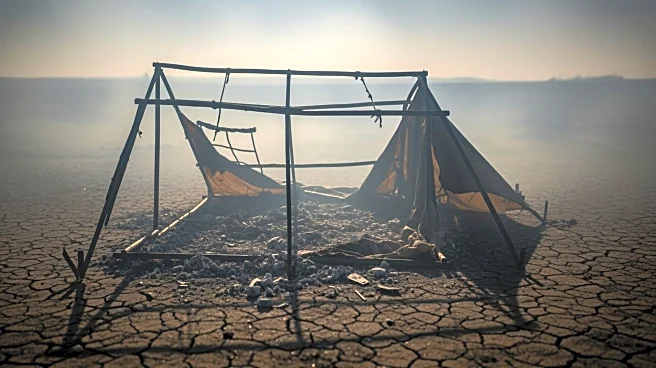
In Gaza, a grandmother and her 5-year-old grandson tragically died when their tent caught fire while cooking. This incident highlights the dire conditions faced by thousands of Palestinians living in makeshift
housing amidst harsh winter weather. The ceasefire between Israel and Hamas, now 12 weeks old, has reduced large-scale bombardments but has not stopped the violence entirely, with ongoing fatalities reported. Aid groups have criticized the insufficient flow of shelter materials into Gaza, despite ceasefire agreements. Angelina Jolie recently visited the Rafah border crossing to advocate for increased humanitarian aid and support for displaced individuals. The crossing remains a contentious issue, with Israel and Egypt at odds over its operation. The humanitarian situation in Gaza remains critical, with significant shortages of essential supplies.
Why It's Important?
The ongoing humanitarian crisis in Gaza underscores the severe impact of prolonged conflict on civilian populations. The lack of adequate shelter and essential supplies exacerbates the suffering of those displaced by the conflict. The situation also highlights the challenges in implementing and maintaining ceasefire agreements, as well as the complexities of international aid distribution in conflict zones. The involvement of high-profile figures like Angelina Jolie brings global attention to the crisis, potentially influencing international policy and aid efforts. The geopolitical tensions surrounding the Rafah crossing further complicate efforts to provide relief, affecting regional stability and international relations.
What's Next?
The humanitarian situation in Gaza is likely to remain a focal point for international aid organizations and political leaders. Efforts to increase the flow of aid and improve living conditions for displaced Palestinians will continue, with potential diplomatic negotiations to address the operation of the Rafah crossing. The international community may increase pressure on Israel and Egypt to facilitate humanitarian access. Additionally, the ceasefire's stability will be closely monitored, with potential implications for future peace talks and regional security. The ongoing violence and humanitarian needs may prompt further international interventions or policy shifts.
Beyond the Headlines
The crisis in Gaza raises broader ethical and legal questions about the responsibilities of warring parties to protect civilians and ensure humanitarian access. The situation also reflects the long-term consequences of unresolved political conflicts and the challenges of achieving sustainable peace in the region. The plight of displaced Palestinians highlights the need for comprehensive solutions that address both immediate humanitarian needs and underlying political issues. The involvement of international figures and organizations may influence public opinion and policy, but lasting change will require coordinated efforts from regional and global stakeholders.