


What's Happening?
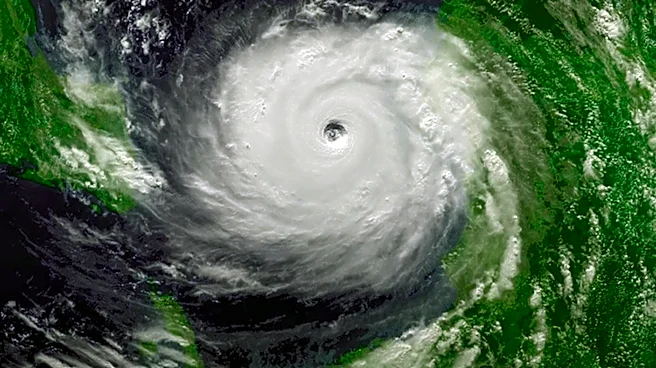
Typhoon Dolphin, the most powerful tropical cyclone to hit China this year, made landfall on the country's eastern coast, bringing torrential rain and hurricane-force winds. The storm made landfall near Yuhuan in Zhejiang province, with maximum sustained
winds of 151 km/h. Authorities have evacuated over one million people, with significant disruptions in transportation, including the cancellation of nearly 1,400 flights in Shanghai. The storm has also affected northern Taiwan and Japan's Okinawa prefecture, causing injuries and power outages.
Why It's Important?
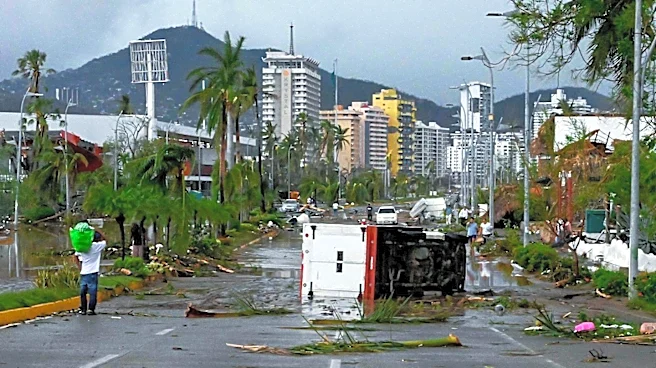
The impact of Typhoon Dolphin is significant due to the large-scale evacuations and disruptions in one of China's most densely populated regions. The storm poses a severe risk of flooding and landslides, which could lead to substantial economic and infrastructural damage. The evacuation of over a million people highlights the potential human cost and the strain on emergency services. The storm's impact on transportation and infrastructure could have broader economic implications, affecting trade and daily life in the affected regions.
What's Next?
As Typhoon Dolphin moves inland, it is expected to weaken, but the risk of prolonged heavy rainfall remains, increasing the threat of flooding and landslides. Authorities will continue to monitor the situation and may need to extend evacuation orders or emergency responses. The focus will likely shift to recovery and rebuilding efforts once the storm passes, with potential international aid and support required for the hardest-hit areas.