



What's Happening?
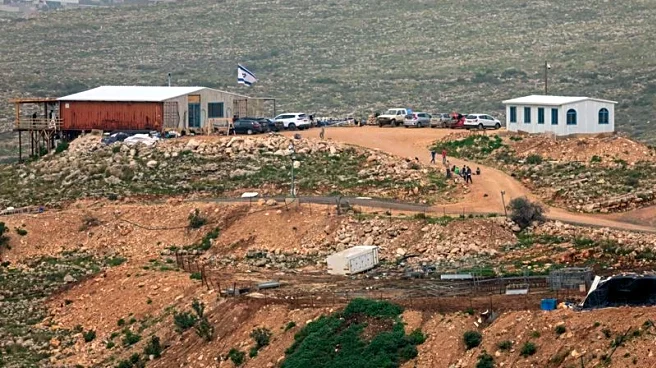
The Galilee Eco Center is embarking on a project to establish a regenerative agriculture and ecological education campus in Israel's Upper Galilee. This initiative, which began as a dream among friends, aims to recreate American-style Jewish farms and ecological learning
centers in Israel. The project has faced significant challenges, including navigating Israel's complex agricultural regulations and securing land through partnerships. Despite these hurdles, the center has successfully registered as an Israeli amuta and a U.S. 501(c)(3) organization, and is developing a 22-dunam campus near Rosh Pina. The center plans to offer educational programs, volunteer opportunities, and service-learning initiatives, integrating regenerative farming practices with Jewish learning.
Why It's Important?
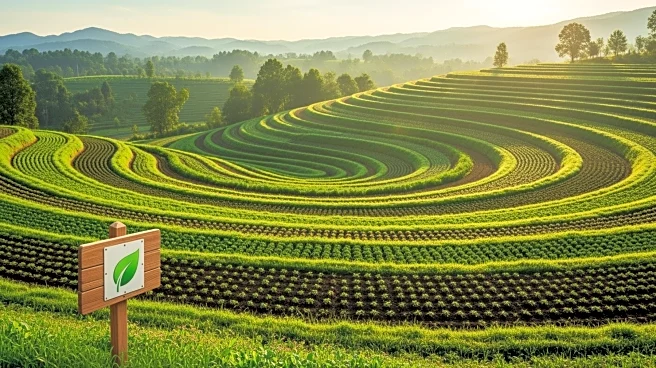
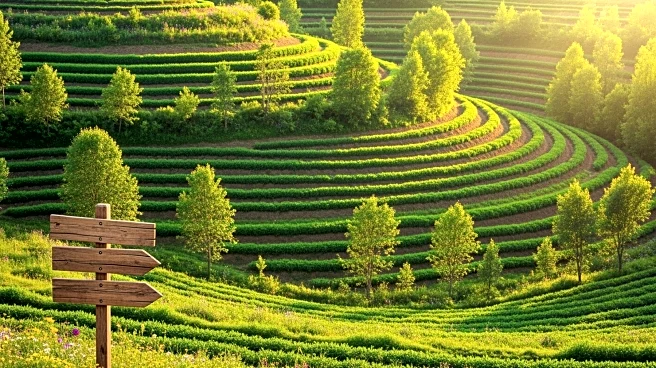
The establishment of the Galilee Eco Center is significant as it represents a commitment to sustainable agriculture and environmental education in Israel. By integrating regenerative farming practices, the center aims to promote environmental responsibility and resilience in a region traditionally dominated by monoculture. This initiative not only seeks to grow food but also to foster a deeper connection to the land and community. The project highlights the potential for collaboration between North American and Israeli partners, which could lead to innovative approaches in agriculture and education. The center's success could serve as a model for similar initiatives in other regions, promoting sustainable practices and ecological awareness.
What's Next?
The Galilee Eco Center plans to continue developing its campus and expanding its educational offerings. The founders are assembling an executive board with expertise in agriculture, education, and environmental policy to guide the next phase of development. The center aims to collaborate with established partners from North America and Israel to achieve its goals. As the project progresses, it will likely face ongoing challenges related to regulatory compliance and funding. However, the center's commitment to long-term growth and community engagement suggests a promising future for this initiative.