






What's Happening?
Israel has sent Iron Dome anti-missile systems and personnel to the United Arab Emirates (UAE) to bolster its defenses during the ongoing conflict with Iran. This deployment, confirmed by U.S. Ambassador to Israel Mike Huckabee, underscores the deepening
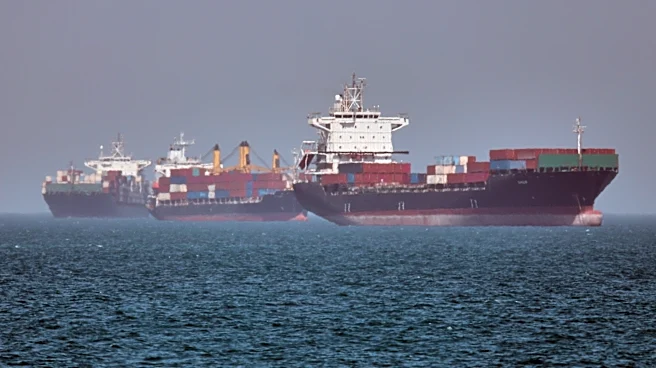
military cooperation between Israel and the UAE, facilitated by the Abraham Accords. The move comes as tensions with Iran remain high, with the Strait of Hormuz under Iranian control and ceasefire negotiations at a standstill. Huckabee's announcement highlights the strategic importance of this alliance in countering Iranian influence in the region.
Why It's Important?
The deployment of the Iron Dome to the UAE represents a significant shift in Middle Eastern alliances, with Israel and the UAE strengthening their defense ties against a common adversary, Iran. This collaboration enhances the security of both nations and serves as a deterrent to Iranian aggression. For the U.S., this development aligns with its strategic interests in the region, supporting allies who are united against Iran. The move also reflects a broader trend of pragmatic alliances in the Middle East, where security concerns are prioritized over historical rivalries. It could potentially alter the balance of power in the region, impacting future diplomatic and military engagements.
What's Next?
The deployment may lead to further military cooperation between Israel and the UAE, potentially involving other regional players. As the situation with Iran remains volatile, the UAE's enhanced defense capabilities could deter further hostilities. The international community will be closely monitoring the impact of this development on regional stability and the security of critical maritime routes like the Strait of Hormuz. Ongoing diplomatic efforts to address Iran's nuclear program and regional activities may also be influenced by this strengthened alliance, as it demonstrates a united front among Iran's regional adversaries.