






What's Happening?
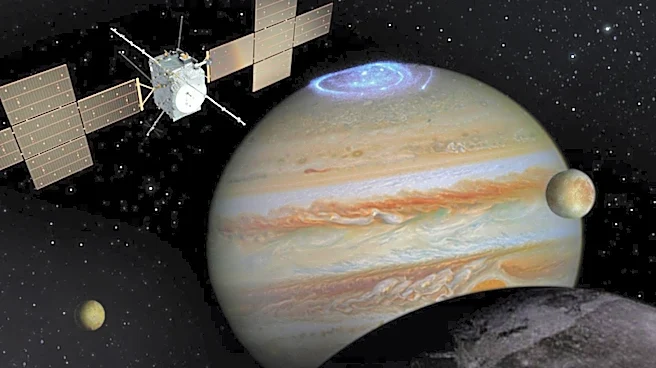
Recent measurements from NASA's Juno mission have revealed that Jupiter's moon Europa has a thick ice shell, estimated to be about 29 kilometers thick, covering a vast saltwater ocean. This ice layer is significantly thicker than previously thought, posing
challenges for future missions aiming to explore the ocean beneath. The data was collected using Juno's Microwave Radiometer, which measured microwave emissions to estimate the ice's thickness. This finding contributes to the ongoing debate about the thickness of Europa's ice shell and its implications for the moon's potential habitability.
Why It's Important?
The discovery of a thick ice shell on Europa is crucial for understanding the moon's potential to support life. The thickness of the ice affects the exchange of chemicals between the ocean and the surface, which is essential for any potential biological processes. A thicker ice shell could limit the movement of nutrients and energy sources, making it more challenging for life to exist. This finding also impacts the planning of future missions, as penetrating such a thick ice layer would require advanced technology and significant resources.
What's Next?
Future missions, such as NASA's Europa Clipper, are set to further investigate Europa's ice shell and ocean. These missions will use advanced instruments to map the ice's thickness and composition, providing more detailed insights into the moon's geology and potential habitability. The data collected will help scientists determine the best locations for future landers or probes that could directly sample the ocean. Understanding Europa's ice shell is a critical step in assessing the moon's potential to harbor life and planning future exploratory missions.