




What's Happening?
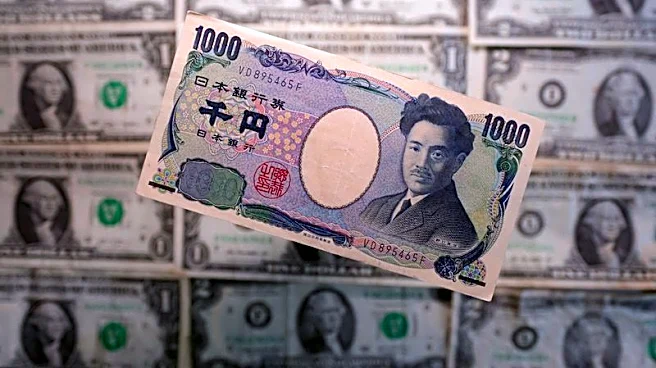
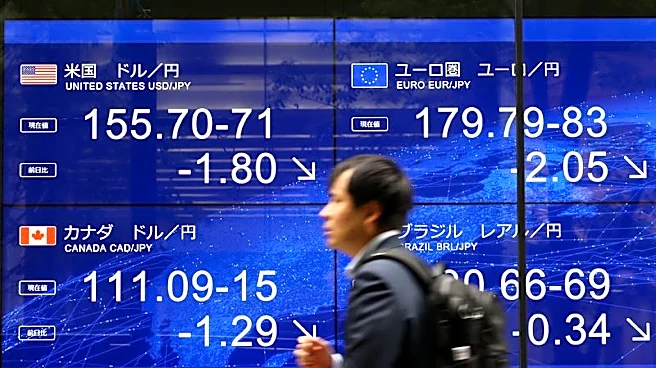
Japan's yen has strengthened significantly as short-dated bond yields reached record highs, driven by speculation of an early Bank of Japan (BOJ) rate hike. This follows a joint US-Japan intervention aimed at supporting the yen, with both countries signaling
readiness for further action. The five-year bond yield rose to a record 2.050%, while the two-year yield climbed to its highest since May 1995. The BOJ's recent warning about potential inflation exceeding targets has added to the speculation of monetary tightening, despite Governor Ueda's comments not fully cementing expectations for a September rate hike.
Why It's Important?
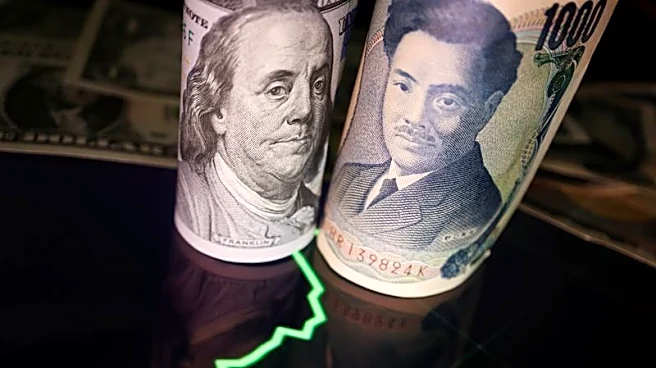
The potential for a BOJ rate hike represents a significant shift in Japan's monetary policy, which has been characterized by prolonged low interest rates. A rate hike could narrow the interest rate differential with the US, impacting the yen's value and Japan's economic landscape. This development is crucial for global financial markets, as changes in Japan's monetary policy can influence international capital flows and currency valuations. Investors and policymakers worldwide will be closely monitoring Japan's actions, as they could set a precedent for other central banks facing similar inflationary pressures.
What's Next?
If the BOJ proceeds with a rate hike, it could lead to further strengthening of the yen and adjustments in global currency markets. Japan's Ministry of Finance and the US Treasury may continue to coordinate interventions to stabilize the yen if necessary. Market participants will be watching for any official announcements or policy changes from the BOJ, as well as any further interventions by Japan and the US. The outcome of these developments will have implications for international trade, investment strategies, and economic growth in Japan and beyond.