
What's Happening?
The U.S. Department of Agriculture (USDA) has revised its food price inflation forecasts downward for 2026 and 2027, indicating slightly slower increases in grocery and restaurant bills. The Economic Research
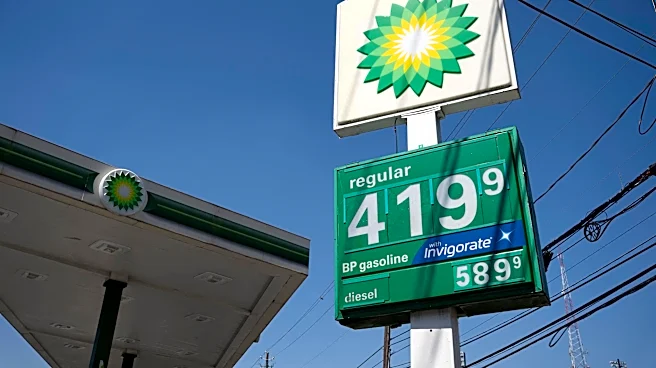
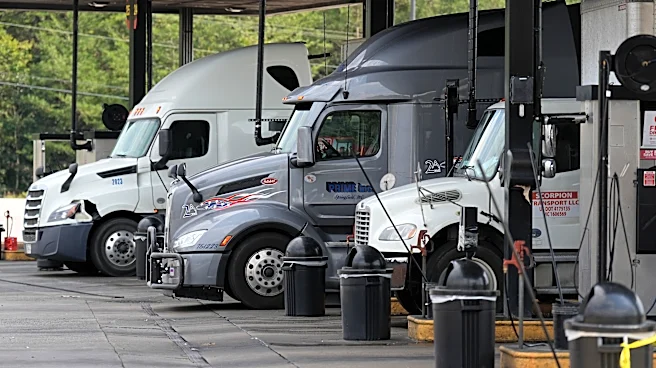
Service (ERS) now projects all food prices to rise by 2.9% in 2026, a slight decrease from the 3.0% forecast in August, and 2.0% in 2027, down from 2.4%. Grocery prices are expected to increase by 2.4% in 2026 and 1.8% in 2027. Despite these overall reductions, certain categories, particularly beef and veal, are still anticipated to see significant price hikes due to tight supplies. Retail beef and veal prices are forecast to increase by 9.4% in 2026 and an additional 4.7% in 2027. Conversely, egg prices are projected to fall by 29.4% in 2026, offering some relief to consumers. The report also highlights the ongoing impact of elevated diesel costs, which are contributing to higher expenses across the agricultural supply chain, affecting transportation and refrigeration.
Why It's Important?
This revised outlook from the USDA is important for U.S. consumers, businesses, and policymakers as it provides a clearer picture of anticipated food costs. While the overall deceleration in food inflation offers some relief, the persistent high prices for beef and the underlying pressure from energy costs, particularly diesel, signal ongoing challenges. For consumers, this means that while the rate of increase in their food bills might slow, prices will continue to rise, adding to accumulated increases. The divergence in price movements across different food categories will influence consumer purchasing decisions, potentially leading to shifts towards more affordable alternatives like pork or poultry. For the agricultural sector, especially producers of beef, the tight supply and high demand will likely maintain profitability, while dairy and egg producers may face farm-gate price declines that are not fully reflected at the retail level. The impact of diesel costs on transportation and cold-chain logistics underscores the vulnerability of the food supply chain to energy market fluctuations, affecting profitability for farmers and increasing operational costs for food manufacturers and retailers.
What's Next?
In the coming months, key factors to watch include whether the recent decline in cattle and wholesale beef prices will translate into lower retail prices, and if the record diesel costs during the harvest season will significantly impact the food-at-home index. The 2027 forecasts remain highly uncertain, with a wide interval ranging from a 5.0% decline to a 9.2% increase for grocery prices, indicating that future reports will be crucial in refining these projections. Consumers may continue to seek out discounts and loyalty programs, especially during holiday seasons, as retailers strategically price anchor items. The ongoing geopolitical situation, particularly the conflict in Iran and attacks on Russian refineries, could further influence fuel prices and, consequently, food costs. The USDA will continue to monitor these variables, and subsequent reports will provide updated insights into how recovering egg supplies, ample milk production, and energy costs interact to shape the food price landscape.
Beyond the Headlines
The USDA's report subtly highlights deeper implications beyond immediate price changes. The persistent economic struggles of Georgia cotton producers, as noted in related agricultural analyses, underscore a broader challenge within U.S. agriculture where rising production costs often outpace market returns. This situation can lead to reduced farm equity and delayed investments, threatening the long-term sustainability of certain agricultural sectors. The report also touches upon the lag between farm-level and retail prices, illustrating the complex dynamics of the food supply chain where various intermediaries absorb costs before they reach the consumer. The emphasis on energy costs, particularly diesel, reveals the interconnectedness of global events, such as geopolitical conflicts, with domestic food prices. This suggests that even seemingly localized food inflation is often a symptom of broader economic and geopolitical forces, making the food supply chain a critical barometer for national and international stability. The continued rise in food prices, even at a slower rate, also raises questions about food security and affordability for lower-income households, potentially exacerbating existing social inequalities.