





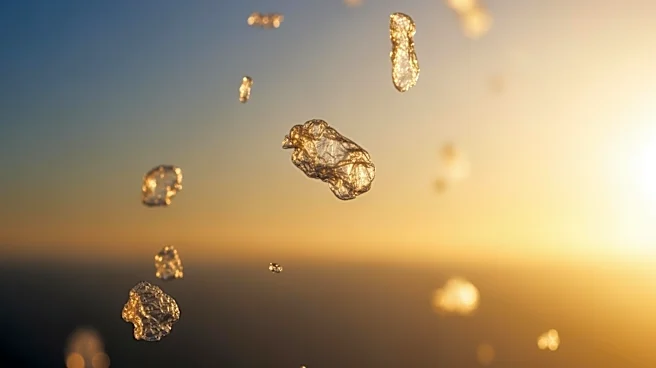
What's Happening?
Recent research highlights the climate impact of microplastics originating from the Great Pacific Garbage Patch, a massive accumulation of plastic waste in the Pacific Ocean. The study, conducted by scientists from China and the U.S., reveals that these
microplastics, once airborne, contribute to global warming. The research, published in the journal Nature, indicates that colored microplastics absorb significantly more sunlight than previously assumed, leading to a warming effect. The study also notes that the warming impact of these particles is comparable to 16% of the effect of black carbon, a known pollutant. The findings suggest that microplastics' contribution to climate change has been underestimated, as previous studies often assumed these particles were clear and less impactful.
Why It's Important?
The study underscores the broader environmental implications of plastic pollution, extending beyond marine ecosystems to atmospheric and climate systems. As microplastics contribute to global warming, they add another layer of complexity to climate change mitigation efforts. This research could prompt policymakers to consider microplastics in climate models and environmental regulations. The findings also highlight the need for comprehensive strategies to address plastic pollution, which could involve reducing plastic production, improving waste management, and enhancing recycling technologies. The potential health impacts of microplastics, although not fully understood, add urgency to addressing this issue.
What's Next?
Future research is needed to quantify the exact amount of microplastics in the atmosphere and their full climate impact. This could lead to updates in climate models and influence international environmental policies. Additionally, there may be increased pressure on industries and governments to reduce plastic waste and develop sustainable alternatives. The study's findings could also drive innovation in recycling technologies and encourage global cooperation to tackle plastic pollution.
Beyond the Headlines
The study reveals a previously overlooked link between plastic pollution and climate change, suggesting that microplastics could have long-term environmental and health impacts. As these particles continue to accumulate, their effects on climate and ecosystems may become more pronounced. This research could shift public perception of plastic pollution, emphasizing its role in climate change and potentially leading to greater advocacy for environmental protection measures.