







What's Happening?
The House Committee on Veterans’ Affairs has unanimously voted to subpoena Oracle Chairman and Chief Technology Officer Larry Ellison and Oracle Health CEO Mike Sicilia. This action follows sharp bipartisan criticism regarding a nearly $17 billion increase
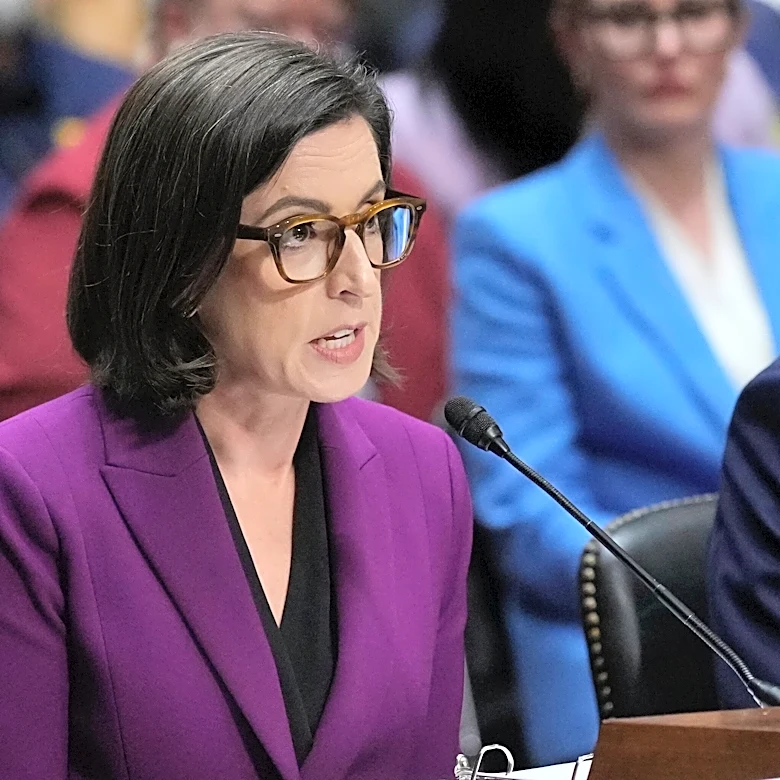
to the Department of Veterans Affairs (VA) Electronic Health Record Modernization (EHRM) contract ceiling, raising it from approximately $10 billion to nearly $27 billion. Lawmakers expressed frustration over learning about this significant increase through news reports rather than directly from the VA or Oracle. Committee Chairman Mike Bost, R-Ill., described the contract as the 'biggest boondoggle' he has ever seen. The subpoena was issued after Oracle declined to testify at a hearing providing an update on the EHRM program. Concerns were also raised about Oracle's 2022 commitment to deliver the EHR system without exceeding contracted costs and to fix performance issues at their own expense, a commitment VA Deputy Secretary Paul Lawrence could not fully explain in the context of the latest contract modification. The Government Accountability Office (GAO) also noted that the VA has not provided the underlying analysis to validate its cost projections, making them unreliable.
Why It's Important?
This development is significant due to the substantial increase in taxpayer money allocated to the VA's EHRM contract and the lack of transparency surrounding it. The nearly $17 billion increase raises serious questions about fiscal responsibility and oversight within government contracting. The EHRM program is critical for modernizing veterans' healthcare records, and its efficient and cost-effective implementation directly impacts the quality of care for millions of U.S. veterans. The subpoena of high-level Oracle executives underscores the committee's determination to hold both the contractor and the VA accountable for escalating costs and performance issues. This situation could set a precedent for increased scrutiny on large-scale government technology contracts, potentially leading to more stringent oversight mechanisms and greater demands for transparency from contractors. The reliability of the program's cost estimates, questioned by the GAO, further highlights potential risks of future cost overruns and delays, ultimately affecting veterans and the public purse.
What's Next?
The subpoena means Oracle Chairman Larry Ellison and Oracle Health CEO Mike Sicilia will be compelled to testify before the House Committee on Veterans’ Affairs. Their testimony is expected to provide direct answers regarding the rationale behind the nearly $17 billion contract ceiling increase, Oracle's commitments made in 2022, and the company's plans to ensure the successful and cost-effective completion of the EHRM program. The committee will likely press for detailed explanations on how the new contract ceiling was determined and what measures are in place to prevent further cost escalations. Depending on the testimony, further congressional actions, such as additional investigations, legislative measures to reform government contracting, or even recommendations for contract re-evaluation, could follow. The VA will also face continued pressure to provide the GAO with the necessary documentation to validate its cost projections and to demonstrate that the program is truly 'back on track' as claimed by Deputy Secretary Paul Lawrence.
Beyond the Headlines
The controversy surrounding the VA's EHRM contract extends beyond immediate financial concerns, touching upon broader issues of accountability in public-private partnerships and the challenges of large-scale technological transformations within government. The lack of transparency, where lawmakers learned of a massive cost increase through news reports, erodes public trust in government spending and oversight. This situation highlights the inherent difficulties in managing complex IT projects, especially when they involve integrating legacy systems and ensuring interoperability across a vast healthcare network like the VA. The repeated issues with the EHRM program, despite Oracle's acquisition of Cerner and promises of improvement, suggest systemic challenges in project management, vendor accountability, and governmental oversight. This could lead to a re-evaluation of how such critical national infrastructure projects are bid, managed, and audited, potentially influencing future procurement policies to prioritize transparency, clear performance metrics, and robust penalty clauses for non-compliance or cost overruns.