





What's Happening?
Congresswoman LaMonica McIver has proposed the RESTORE Third Spaces Act, a legislative initiative aimed at establishing a $200 million federal pilot grant program. This program is designed to rebuild and improve public 'third places' across the United
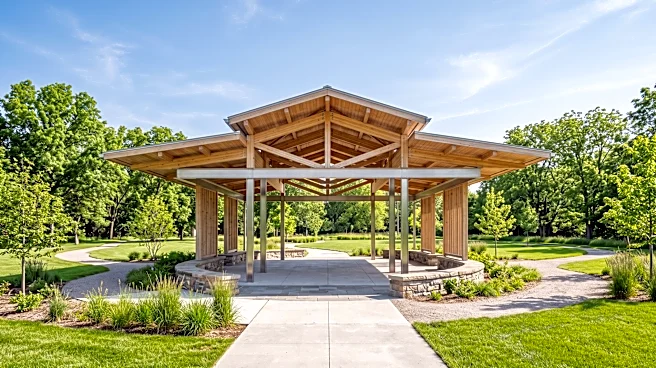
States. Third places are defined as public spaces, distinct from home or work/school, where individuals can gather to foster social connections in a casual, often low-cost environment. The proposal comes amidst a growing concern over the disappearance of such spaces, which disproportionately affects young people. The Project for Public Spaces highlights that teens are actively seeking to understand and reclaim these communal areas, often facing obstacles like restrictive policies and a lack of dedicated youth spaces. This legislative effort seeks to provide tangible support for communities to create and maintain accessible public gathering spots, addressing a critical need for social infrastructure.
Why It's Important?
The proposed RESTORE Third Spaces Act is significant because it addresses a critical gap in community infrastructure and social well-being. The decline of third places has been linked to increased social isolation, particularly among teenagers, and can contribute to negative mental health outcomes. By investing $200 million, the act aims to counteract this trend, providing federal funding to revitalize parks, libraries, recreation centers, and other public spaces. This initiative could foster stronger community bonds, offer safe and accessible environments for social interaction, and reduce reliance on digital platforms for connection. For communities, especially those with limited resources, these grants could be transformative, enabling the creation of spaces that support youth development, civic engagement, and overall public health. The act also signals a recognition at the federal level of the importance of physical public spaces in a rapidly digitizing society.
What's Next?
The next step for the RESTORE Third Spaces Act will involve navigating the legislative process in Congress. This includes committee reviews, potential amendments, and votes in both the House and Senate. Should the act pass, the Department of Housing and Urban Development or a similar federal agency would likely be tasked with developing guidelines for the pilot grant program, including application criteria, funding allocation, and oversight mechanisms. Communities and local governments would then be able to apply for these grants to fund their projects. The success of this pilot program could influence future federal investments in public spaces and potentially lead to broader, more permanent funding initiatives. Additionally, the act's progress may encourage further advocacy from organizations like the Project for Public Spaces and youth-led groups, amplifying the call for more accessible and inclusive public environments.
Beyond the Headlines
Beyond its immediate goal of funding public spaces, the RESTORE Third Spaces Act touches upon deeper societal implications. The decline of third places reflects broader shifts in urban planning, economic priorities, and social behavior, where commercial interests often supersede the need for free, communal gathering spots. This legislation could spark a re-evaluation of urban development strategies, encouraging city planners to prioritize public spaces as essential components of healthy communities rather than afterthoughts. Ethically, it underscores the importance of equitable access to social infrastructure, recognizing that not all individuals have the means to participate in commercialized social venues. Culturally, a resurgence of third places could foster a renewed sense of local identity and civic participation, potentially mitigating the effects of digital isolation and promoting face-to-face interaction as a cornerstone of community life. It also highlights the growing recognition of youth as key stakeholders in shaping their environments.