








What's Happening?
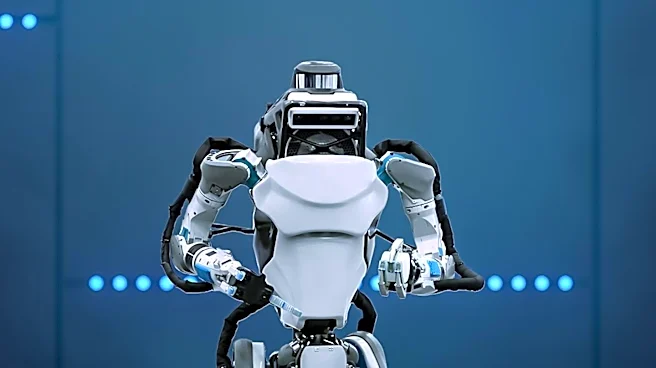
A video featuring a humanoid robot from EngineAI, a Shenzhen-based startup, has gone viral in China. The footage shows the company's CEO, Zhao Tongyang, being knocked down by one of his own robots in a pre-planned stunt. This demonstration highlights
the rapid advancements in humanoid robotics, showcasing the robot's agility and combat capabilities. EngineAI specializes in developing general-purpose humanoids with a focus on joint power and energy density. The company integrates over 20 high-performance joint actuators into each robot, allowing for smooth and reliable movements. EngineAI's production facility can assemble a robot in just 15 minutes, with a capacity to deliver up to 1,000 units monthly. The company is part of China's broader push to accelerate its robotics industry, aiming to move humanoid robots from testing to actual operations by the end of the year.
Why It's Important?
The viral stunt underscores China's growing capabilities in the field of humanoid robotics, positioning the country as a leader in this high-tech industry. The advancements demonstrated by EngineAI could have significant implications for various sectors, including manufacturing, security, and personal assistance. As China aims to cultivate new productive forces through high-tech innovation, the mass production and deployment of humanoid robots could drive economic growth and transform industries. The ability to rapidly produce and deploy these robots at scale could give China a competitive edge in the global robotics market, potentially influencing international trade and technology standards.
What's Next?
China's Ministry of Industry and Information Technology, along with the State-owned Assets Supervision and Administration Commission, has launched a program to train humanoid robots in real-world settings. The goal is to build deployment capacity at a 10,000-unit scale by the end of the year. This initiative is expected to accelerate the integration of humanoid robots into various industries, potentially leading to increased automation and efficiency. As these robots become more prevalent, there may be discussions around regulatory frameworks, ethical considerations, and the impact on the workforce. Stakeholders, including businesses and policymakers, will need to address these challenges to ensure a smooth transition.