






What's Happening?
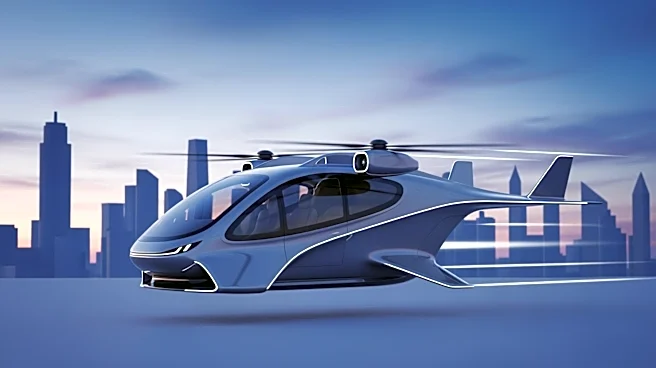
Joby Aviation has successfully conducted its first electric vertical takeoff and landing (eVTOL) demonstration flights between Manhattan and John F. Kennedy International Airport. These flights are part of a 10-day eVTOL Integration Pilot Program, which
aims to explore the potential of next-generation aviation technology in urban settings. The electric aircraft, resembling large battery-powered drones, can carry up to five people, including a pilot. They are designed to take off vertically like helicopters and then transition to forward flight, offering a quieter and emission-free alternative to traditional helicopters. The goal is to reduce travel time between Manhattan and JFK to under 10 minutes, compared to the usual one to two-hour drive. Joby Aviation, which owns the helicopter ride-share company Blade, is collaborating with the Port Authority of New York and New Jersey, as well as other partners like Delta Air Lines and Uber, to advance this technology.
Why It's Important?
The introduction of electric air taxis in New York City represents a significant step forward in urban transportation innovation. By reducing travel time and emissions, these aircraft could transform how people commute in densely populated areas. The initiative aligns with broader efforts to integrate sustainable technologies into public infrastructure, potentially setting a precedent for other cities worldwide. The collaboration with major transportation stakeholders like the Port Authority and Delta Air Lines underscores the commercial viability and interest in this technology. If successful, this could lead to widespread adoption, impacting industries such as aviation, urban planning, and environmental policy. The project also supports the Federal Aviation Administration's efforts to develop regulations for eVTOL operations, which could pave the way for broader implementation of air taxis.
What's Next?
Joby Aviation is in the final stages of obtaining FAA certification, a crucial step for commercial deployment. The FAA's five-stage certification process is designed to ensure safety and reliability. As part of the eVTOL Integration Pilot Program, data collected from these flights will inform the development of new regulations. The program also includes testing in other states like Texas, Utah, Florida, and North Carolina, focusing on various applications such as regional passenger transport and emergency response. The success of these pilot projects could accelerate the timeline for commercial air taxi services, potentially leading to a new era of urban mobility. Stakeholders, including government agencies and private companies, will likely continue to collaborate to address regulatory, technical, and operational challenges.