







What's Happening?
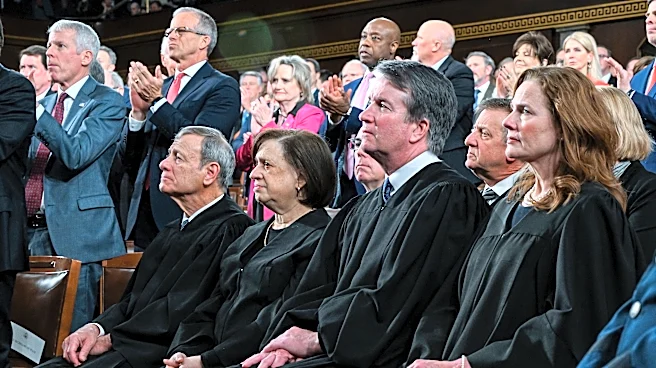
Justice Elena Kagan of the United States Supreme Court has declined an emergency request from a surrogate involved in a multistate custody dispute. The case centers on a newborn with a serious heart condition. Kagan's decision allows a lower court's ruling
to stand, which granted custody of the infant to the biological parents from California. This action by a Supreme Court Justice highlights the complex legal and ethical challenges that can arise in surrogacy arrangements, particularly when medical complications are involved. The specific details of the lower court's decision and the arguments presented by the surrogate were not detailed, but the outcome means the Supreme Court will not intervene at this stage.
Why It's Important?
This decision by Justice Kagan underscores the Supreme Court's role in selectively intervening in cases, often reserving its emergency docket for matters of significant national importance or clear legal error. While this specific case involves a private family matter, it touches upon broader legal questions surrounding surrogacy contracts, parental rights, and interstate jurisdiction, which are increasingly relevant in modern family law. The Court's non-intervention signals a deference to lower court decisions in complex factual scenarios, potentially influencing how similar disputes are handled in state and federal courts. The outcome could also impact the legal frameworks governing surrogacy, prompting further discussion on the need for clearer, more uniform laws to protect all parties involved in such arrangements.
What's Next?
With Justice Kagan declining to intervene, the lower court's decision granting custody to the biological parents will remain in effect. The immediate focus will likely shift to the well-being of the newborn with the heart condition and the implementation of the custody order. This case may prompt legal scholars and policymakers to re-examine existing surrogacy laws and consider potential reforms to address ambiguities or gaps, especially concerning medical emergencies and interstate conflicts. Future legal challenges related to surrogacy could draw upon the precedents set or avoided in this case, influencing how courts approach similar disputes. The decision could also encourage states to review and potentially update their own surrogacy statutes to provide clearer guidelines and protections.
Beyond the Headlines
The case brings to light the profound ethical and emotional dimensions of surrogacy, particularly when unforeseen medical issues arise. It highlights the potential for conflict between the surrogate's wishes and the biological parents' rights, especially in the absence of clear, universally accepted legal frameworks. The involvement of a newborn with a serious heart condition adds a layer of urgency and moral complexity, forcing a consideration of the child's best interests amidst legal battles. This situation could spark broader societal conversations about the definition of parenthood, the commercialization of reproduction, and the need for comprehensive legal and ethical guidelines to navigate the evolving landscape of assisted reproductive technologies. The multistate nature of the dispute also points to the challenges of legal harmonization across different jurisdictions within the U.S.