



What's Happening?
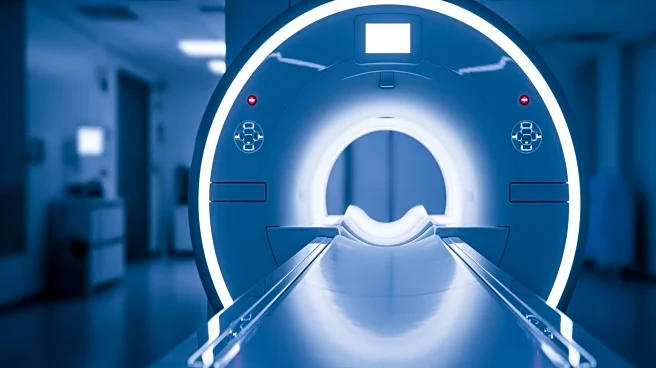
A recent column explores the experience and implications of undergoing a full-body MRI scan, a technology that promises to detect potential health issues such as cancers and aneurysms before they become life-threatening. The scans, which utilize diffusion-weighted
imaging and artificial intelligence, can identify abnormalities as small as 2 millimeters. However, they are costly, priced at $2,500 per scan, and are not covered by insurance. The scans often result in false positives, leading to unnecessary biopsies and associated risks. Despite these drawbacks, some patients find the scans beneficial, as they can detect serious conditions early. The American College of Radiology currently advises against routine full-body screenings due to insufficient evidence of their efficacy, though this stance may change as more data becomes available.
Why It's Important?
The introduction of full-body MRI scans represents a significant advancement in medical imaging, offering the potential to revolutionize preventative healthcare. By detecting diseases at an early stage, these scans could potentially save lives and reduce long-term healthcare costs. However, the high cost and risk of false positives pose significant barriers to widespread adoption. The scans are currently accessible primarily to wealthier individuals, raising concerns about healthcare inequality. Additionally, the psychological impact of receiving ambiguous or false-positive results could lead to increased anxiety and unnecessary medical interventions. As the technology evolves, it may influence healthcare policies and insurance coverage, potentially reshaping the landscape of preventative medicine.
What's Next?
As more data becomes available, the medical community will continue to evaluate the efficacy and cost-effectiveness of full-body MRI scans. Insurance companies may reconsider their coverage policies if the technology proves to be a reliable tool for early disease detection. Meanwhile, healthcare providers and patients will need to weigh the benefits and risks of these scans, considering factors such as personal health history and tolerance for uncertainty. The ongoing debate may also prompt further research into improving the accuracy of these scans and reducing the incidence of false positives.
Beyond the Headlines
The rise of full-body MRI scans highlights broader ethical and societal questions about the role of advanced technology in healthcare. As these scans become more common, there may be increased pressure on individuals to undergo such screenings, potentially leading to overdiagnosis and overtreatment. The technology also raises questions about privacy and the management of sensitive health data. Furthermore, the disparity in access to these scans underscores the need for equitable healthcare solutions that ensure all individuals can benefit from advancements in medical technology.