





What's Happening?
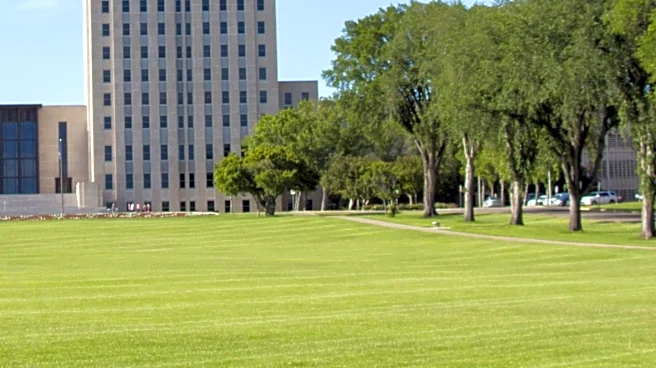
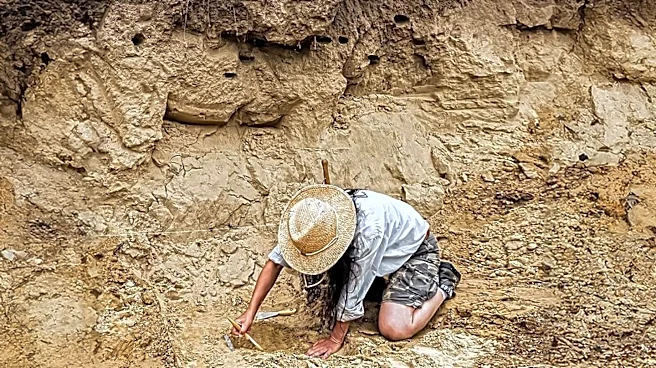
A new fossil dig pit is planned for the North Dakota Capitol grounds in Bismarck, designed to enhance paleontology education for children. State Geologist Clint Boyd presented the concept to the Capitol Grounds Planning Commission in October, explaining
that the sandbox-style pit could accommodate about a dozen children. This initiative aims to supplement the North Dakota Geological Survey’s existing public fossil dig programs, which currently have a minimum age requirement of 10. The proposed dig pit would cater to younger children, particularly those under 10, and could also benefit summer school programs by offering a hands-on learning experience alongside tours of the Heritage Center's paleontology collection. The pit will be approximately 144 square feet, enclosed with a roof and screened walls to protect it from animals.
Why It's Important?
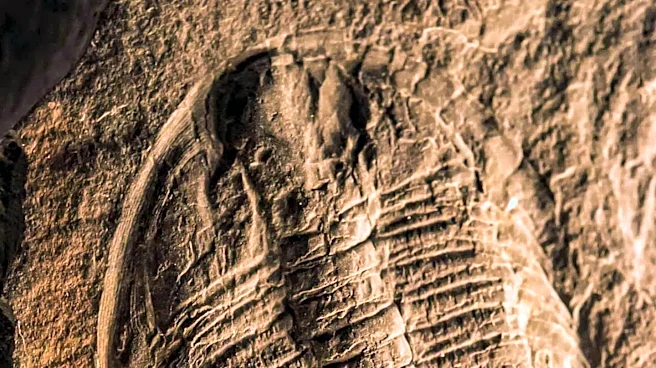
This project is significant for expanding educational opportunities in North Dakota, particularly in the field of paleontology. By providing an accessible and engaging activity for younger children, the fossil dig pit addresses a gap in current educational offerings, allowing more families to participate in scientific learning. It leverages the state's rich paleontological heritage, housed in the Heritage Center, to create an interactive experience that can spark early interest in science. The project's location near the French Gratitude Train and the Military Gallery expansion integrates it into a broader cultural and historical complex, enhancing the overall visitor experience at the Capitol grounds. This initiative underscores the value of informal science education in fostering curiosity and scientific literacy from a young age.
What's Next?
The Capitol Grounds Planning Commission is expected to discuss the final design and cost of the fossil dig pit during its November meeting. Preliminary cost estimates range from $120,000 to $250,000, with funding anticipated to come from a combination of donations and the North Dakota Geological Survey's leftover biennial budget. If approved, construction of the new fossil dig pit is projected to begin in spring 2027. The project will be strategically located to connect with new walking paths being developed as part of the $78 million Military Gallery expansion, ensuring easy access for visitors.
Beyond the Headlines
The development of the fossil dig pit reflects a broader trend in educational institutions and public spaces to create immersive and experiential learning environments. By making paleontology accessible and fun, the project could inspire a new generation of scientists and foster a deeper appreciation for natural history. It also highlights the collaborative efforts between state agencies, such as the Geological Survey and the State Historical Society, to maximize educational impact and visitor engagement. This type of hands-on learning can be particularly effective in developing critical thinking skills and an understanding of scientific processes, extending beyond the facts of fossils to the methods of discovery.