


What's Happening?
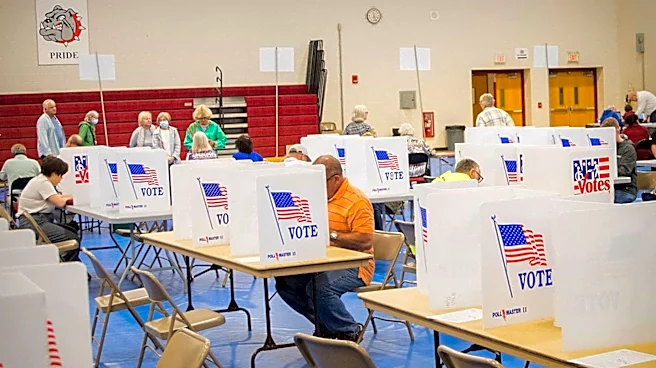
Early voting turnout in Central Florida has been slow ahead of Tuesday's primary election. As of Friday, only about one in ten registered voters in Orange, Osceola, Seminole, and Lake counties had cast a ballot, according to their respective supervisors
of elections offices. Statewide, approximately 1.47 million Floridians had voted by Friday morning, representing about 11% of the state's 13.5 million registered voters. Of these, roughly 980,000 voted by mail and 491,000 through early in-person voting. Registered Republicans, who outnumber Democrats in Florida, accounted for over 280,000 in-person early votes compared to Democrats' 170,000. However, Democrats held an advantage in mail-in ballots, with 440,500 compared to Republicans' 380,500, a trend observed as President Donald Trump has repeatedly questioned voting by mail. Additionally, about 140,500 mail ballots and nearly 32,000 early votes were cast by individuals without party affiliation. Local election officials noted that a 2021 state law, signed by Governor Ron DeSantis, has impacted mail-in voting by requiring voters to submit a new request for mail-in ballots after each presidential election cycle.
Why It's Important?
The slow early voting turnout in Central Florida could have significant implications for the upcoming primary election outcomes. Low participation rates often mean that highly motivated or organized voter blocs can exert disproportionate influence, potentially leading to unexpected results in key races for governor, congressional seats, and local offices. The disparity in voting methods between parties—Democrats favoring mail-in ballots and Republicans preferring in-person early voting, amidst President Donald Trump's skepticism of mail voting—highlights evolving partisan strategies and voter preferences. Furthermore, the impact of the 2021 state law requiring new mail-in ballot requests underscores how legislative changes can directly affect voter access and participation, potentially disenfranchising voters unaware of the new requirement. This situation emphasizes the critical role of voter engagement efforts and the potential for Election Day turnout to dramatically shift the electoral landscape. The convenience factor of mail voting, despite the new law, remains a draw for many, as noted by election officials.
What's Next?
With early voting periods concluding in various Central Florida counties by Sunday, the focus will now shift to Election Day on Tuesday. Voters who have not yet cast their ballots will need to do so in person at their designated polling places, which will be open from 7 a.m. to 7 p.m. Vote-by-mail ballots must also reach election offices by 7 p.m. on Tuesday to be counted. Election officials and campaigns will be closely monitoring turnout throughout the day, with efforts likely intensifying to mobilize remaining voters. Following the primary, the results will determine the candidates who will advance to the general election, setting the stage for further campaigning and political discourse. Analysts will scrutinize the final turnout numbers and demographic breakdowns to understand voter behavior and the effectiveness of different voting methods and legislative changes. The outcomes of these primary races will shape the political landscape for the general election, influencing party platforms, campaign messaging, and resource allocation.
Beyond the Headlines
The slow early voting turnout in Central Florida reflects broader national discussions about voter engagement, election security, and the evolving landscape of electoral processes. The 2021 state law requiring new mail-in ballot requests, while intended to enhance election integrity, also highlights the tension between security measures and voter access. This case exemplifies how changes in voting regulations can create barriers, even if unintended, for segments of the electorate. Furthermore, the differing preferences for voting methods between political parties, influenced by figures like President Donald Trump, underscore a growing partisan divide in how elections are conducted and perceived. This trend could lead to further legislative battles over voting rights and procedures, potentially impacting future election cycles. The long-term implications involve questions of democratic participation, the role of state governments in shaping electoral rules, and the public's trust in the integrity of the voting system. The ongoing debate about mail-in voting, fueled by political rhetoric, contributes to a complex environment where voter confidence can be easily swayed, making the administration of elections a continuously scrutinized and politically charged endeavor.