








What's Happening?
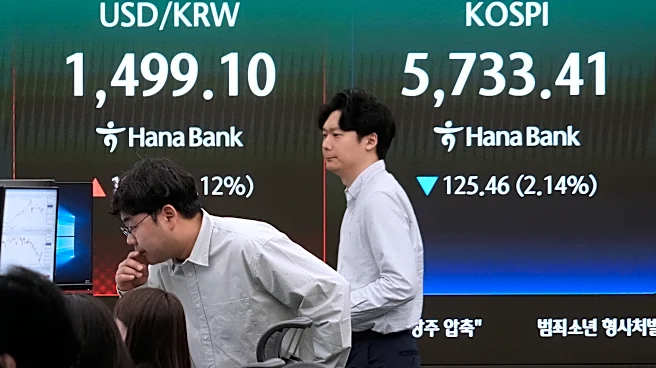
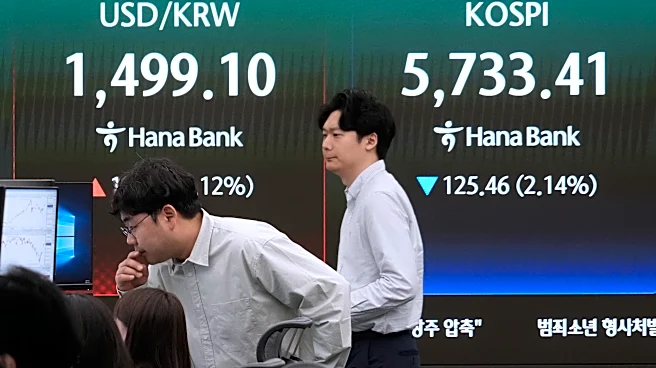
The ongoing conflict involving the US, Israel, and Iran is projected to have significant economic repercussions for the Asia-Pacific region, according to a United Nations report. The military escalation in the Middle East is expected to result in output
losses ranging from $97 billion to $299 billion due to increased costs in transportation, electricity, and food. This economic strain could account for 0.3% to 0.8% of the region's GDP. The United Nations Development Programme (UNDP) also warns that the conflict could push 32 million people into poverty globally, with 8.8 million of those in the Asia-Pacific. The situation has been exacerbated by President Trump's blockade of the Strait of Hormuz, a critical waterway for maritime traffic to and from Iran's ports, following failed peace talks. The blockade has led to a severe oil crisis, driving up prices for crude and natural gas, and impacting economic growth projections.
Why It's Important?
The economic impact of the US-Iran conflict is particularly severe for the Asia-Pacific region, which is heavily reliant on energy imports from the Middle East. The disruption in energy supplies has forced countries to seek alternative, often costly, energy sources while attempting to conserve fuel and electricity. This situation poses a significant risk to the region's economic stability, as it accounts for more than half of the world's manufacturing output. Key US allies in the region, such as South Korea, Japan, and the Philippines, are scrambling to mitigate the economic fallout. The conflict's continuation could lead to persistently high energy and food prices, tighter financial conditions, and a potential global food crisis due to disrupted supplies of essential farming products.
What's Next?
Efforts to resolve the conflict continue, with the US and Iran engaging in talks to end the war. However, even if the Strait of Hormuz is reopened, experts predict that normal market conditions will not be restored for several months. The International Monetary Fund (IMF) and the Asian Development Bank have already adjusted their economic growth forecasts for the region, anticipating slower growth and higher inflation. The IMF has also highlighted the risk of increased food insecurity due to high fertilizer prices. The situation remains fluid, with potential for further economic adjustments depending on the conflict's resolution.