






What's Happening?
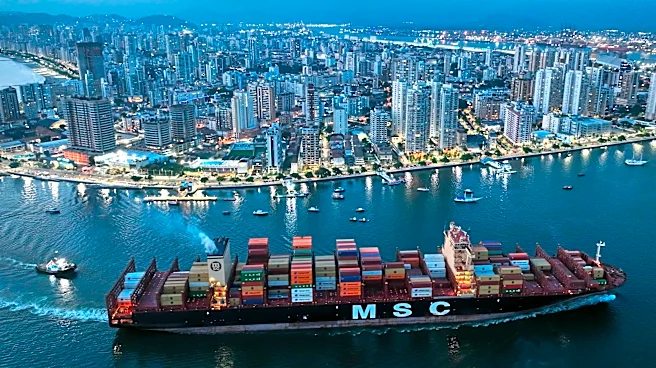
The International Maritime Organization (IMO) has adopted the world's largest emission control area (ECA) in the North-East Atlantic Ocean, setting stricter emissions limits for ships operating in this busy maritime corridor. The ECA, expected to be fully
implemented by September 2028, covers the exclusive economic zones of several European countries, including France, Ireland, and the United Kingdom. It aims to reduce emissions of sulfur oxides (SOx), nitrogen oxides (NOx), and particulate matter (PM2.5), which are linked to serious health impacts and environmental damage. The decision was formalized at the IMO's Marine Environment Protection Committee meeting, supported by technical analysis from the ICCT.
Why It's Important?
The establishment of the ECA represents a significant step towards reducing maritime pollution and improving air quality in one of the world's busiest shipping regions. By imposing stricter emissions limits, the ECA aims to prevent thousands of premature deaths and save billions in health costs. The initiative also addresses the environmental impact of shipping emissions, which contribute to ocean acidification and harm marine ecosystems. The ECA's implementation could serve as a model for other regions, encouraging global efforts to reduce maritime pollution and promote sustainable shipping practices.
What's Next?
As the ECA is implemented, shipping companies will need to comply with the new emissions limits, potentially requiring investments in cleaner technologies and fuels. The IMO will continue to monitor compliance and assess the ECA's impact on emissions and air quality. The initiative may prompt other regions to establish similar control areas, contributing to a broader global effort to reduce maritime pollution. The success of the ECA could influence future international regulations and policies aimed at promoting sustainable shipping and protecting marine environments.