


What's Happening?
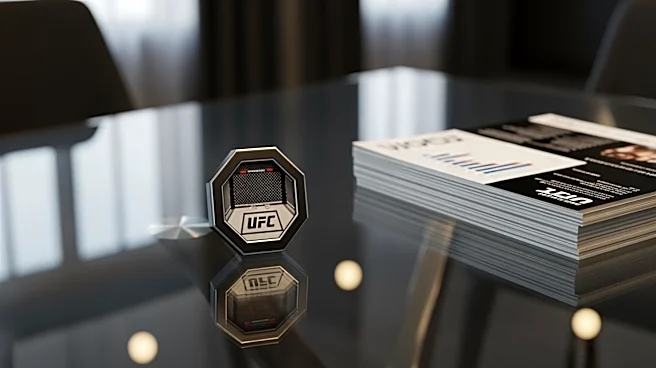
President Trump has come under scrutiny for purchasing stock in TKO Group Holdings, the parent company of the Ultimate Fighting Championship (UFC), ahead of a planned UFC event at the White House. Financial disclosures revealed that Trump bought up to $50,000
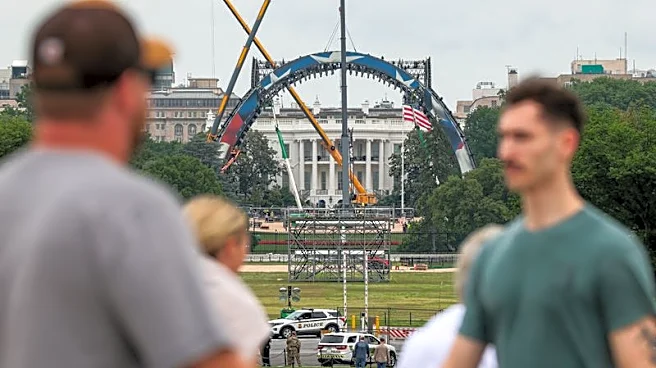
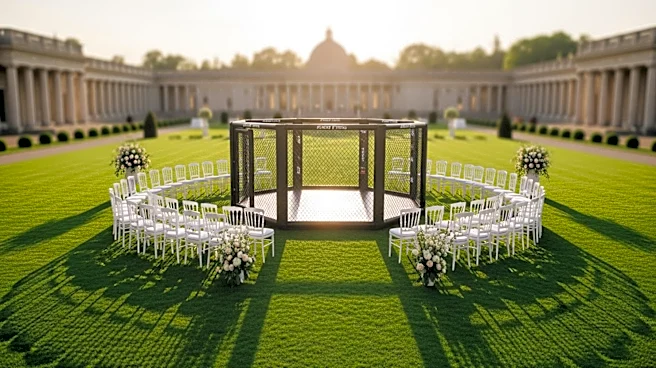
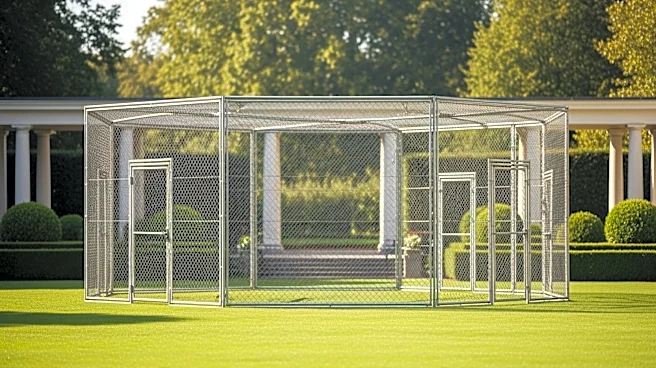
worth of shares in the company, which also owns World Wrestling Entertainment (WWE). The purchase was made shortly before the announcement of the 'UFC Freedom 250' event, set to coincide with Trump's 80th birthday. Critics argue that this move represents a conflict of interest, as Trump is using his position to promote ventures that could enrich him personally. The event is expected to be a major spectacle, with a 5000-seat arena being constructed on the South Lawn of the White House.
Why It's Important?
The controversy surrounding Trump's stock purchase highlights ongoing concerns about the intersection of personal business interests and public office. Critics, including Lauren White from the Citizens for Responsibility and Ethics in Washington, argue that Trump's actions blur the lines between serving the public and personal enrichment. This situation raises ethical questions about the use of the presidency to promote private ventures. The event itself, heavily promoted by Trump and UFC president Dana White, is seen as a significant business opportunity for TKO Group Holdings, potentially boosting its revenue and shareholder value. The criticism underscores broader concerns about transparency and accountability in government.
What's Next?
The 'UFC Freedom 250' event is scheduled to take place on the White House lawn, drawing significant attention from donors, lobbyists, and members of Congress eager to attend. The event's success could further enhance the UFC's visibility and business prospects. However, the controversy may lead to increased scrutiny of Trump's financial dealings and potential conflicts of interest. Political opponents and ethics watchdogs may continue to challenge Trump's actions, potentially influencing public perception and policy discussions regarding ethics in government.
Beyond the Headlines
The situation raises deeper questions about the ethical implications of a sitting president engaging in business activities that could benefit him financially. It highlights the challenges of maintaining transparency and accountability in government, especially when personal interests are involved. The event also reflects the broader cultural impact of sports and entertainment in political settings, as well as the influence of high-profile figures like Dana White in shaping public events. The construction of the arena on the White House lawn symbolizes the blending of political power and entertainment, prompting discussions about the role of spectacle in governance.