






What's Happening?
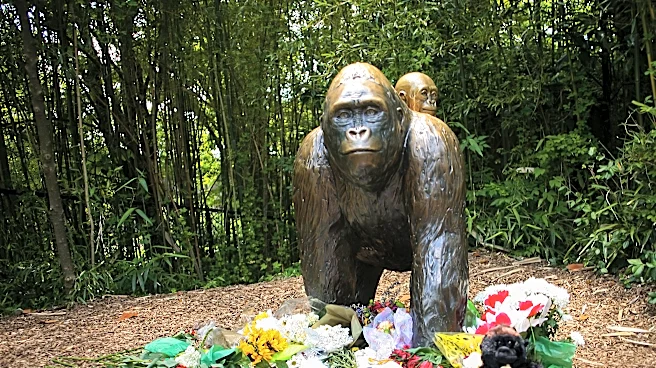
On May 28, 2016, officials at the Cincinnati Zoo made the controversial decision to shoot and kill Harambe, a 17-year-old critically endangered western lowland gorilla. This action was taken after a young child climbed into Harambe's enclosure, prompting
the gorilla to drag the child around. The incident was widely covered by media outlets, including CBS News, and sparked significant public backlash. Many criticized the zoo's decision, arguing that non-lethal measures could have been employed to ensure the child's safety while preserving the life of the gorilla. The event led to widespread debate about zoo safety protocols and the ethical considerations of keeping wild animals in captivity.
Why It's Important?
The killing of Harambe raised important questions about the safety and ethical implications of zoos. It highlighted the need for improved safety measures to prevent similar incidents, such as better barriers and surveillance. The public outcry also brought attention to the broader issue of animal rights and the conditions of animals in captivity. This incident became a catalyst for discussions on how zoos can balance public safety with the welfare of the animals they house. The event also had a lasting impact on public perception, influencing how zoos are viewed and operated in the United States.
What's Next?
In the aftermath of the incident, zoos across the country have been prompted to review and enhance their safety protocols to prevent similar occurrences. This includes reassessing enclosure designs and visitor access to ensure both human and animal safety. Additionally, the incident has fueled ongoing debates about the role of zoos in conservation and education, and whether alternative models, such as wildlife sanctuaries, might better serve these purposes. Stakeholders, including animal rights organizations and zoo associations, continue to engage in discussions to find a balance between conservation efforts and ethical treatment of animals.
Beyond the Headlines
The Harambe incident has had a lasting cultural impact, becoming a symbol in discussions about animal rights and the ethics of captivity. It has also influenced public discourse on how society values animal life and the responsibilities of institutions that house them. The event has been referenced in various media and has sparked a broader movement advocating for the rights and welfare of animals in captivity. This has led to increased scrutiny of zoos and similar institutions, pushing for reforms that prioritize animal welfare alongside educational and conservation goals.