





What's Happening?
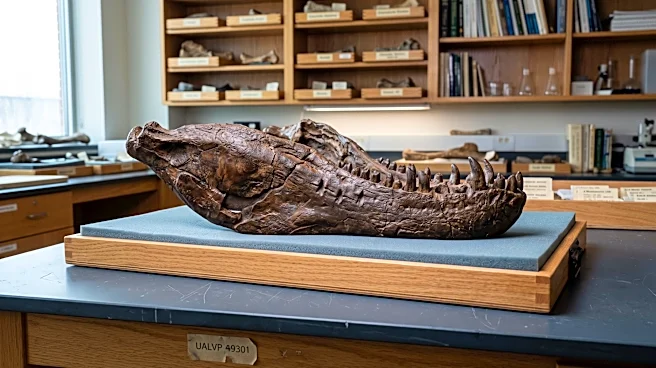
A recent fossil analysis published in the Journal of Paleontology, led by University of Alberta researcher Joshua Doyon, provides the first reported evidence of raptors feeding on tyrannosaurs. Scratches found on the jawbone of an Albertosaurus, a relative
of Tyrannosaurus rex, indicate that a much smaller carnivore, likely a dromaeosaurid (commonly known as a raptor), scavenged on the remains of the half-metric-ton dinosaur. The fossil, discovered in 2022 near Drumheller, Alberta, in the Late Cretaceous Horseshoe Canyon Formation, represents the smallest associated skull of an Albertosaurus described to date. The tooth marks, including serration scratches and parallel scrapes, were analyzed to determine the size and type of the feeder. While a dromaeosaurid, such as Atrociraptor marshalli, is the strongest candidate, researchers also considered the possibility of a very young Albertosaurus engaging in cannibalism or another small carnivorous dinosaur like Richardoestesia.
Why It's Important?
This discovery significantly enhances our understanding of predator-prey dynamics and scavenging behaviors in Late Cretaceous ecosystems. The finding suggests that even apex predators like tyrannosaurs could become food for smaller carnivores after death, highlighting the opportunistic nature of scavenging and the complex food webs of the time. The detailed analysis of tooth marks provides valuable insights into the feeding habits of dromaeosaurids and other small carnivores, which are often difficult to ascertain from skeletal remains alone. This research also demonstrates the importance of public fossil discoveries and meticulous paleontological investigation in uncovering new aspects of prehistoric life, contributing to a more complete picture of dinosaur ecology and behavior in North America.
What's Next?
Future research will likely involve further analysis of similar fossil evidence to confirm and expand upon these findings, potentially identifying more instances of raptor scavenging on larger dinosaurs. Paleontologists may also seek additional fossil specimens with well-preserved tooth marks to refine the identification of the specific carnivores involved and to better understand the conditions under which such scavenging occurred. The methodology developed for analyzing tooth mark spacing and serration patterns could be applied to other fossil discoveries, leading to a broader understanding of feeding interactions across different dinosaur species and geological periods. Continued study of the Horseshoe Canyon Formation and other Late Cretaceous sites in Alberta will be crucial for uncovering more details about these ancient ecosystems.
Beyond the Headlines
This study delves into the often-overlooked aspect of scavenging in prehistoric environments, challenging the simplistic view of dinosaurs as solely hunters or hunted. It underscores that even the most formidable predators were part of a larger ecological cycle, where their remains contributed to the sustenance of other species. The meticulous process of analyzing tiny scratches on a fossil jawbone to reconstruct ancient feeding events highlights the power of forensic paleontology and the detailed information that can be extracted from seemingly minor traces. This research also implicitly touches upon the concept of taphonomy—the study of how organisms decay and become fossilized—as the preservation of these tooth marks provides critical clues about post-mortem processes and the environmental conditions of the Late Cretaceous period.