


What's Happening?
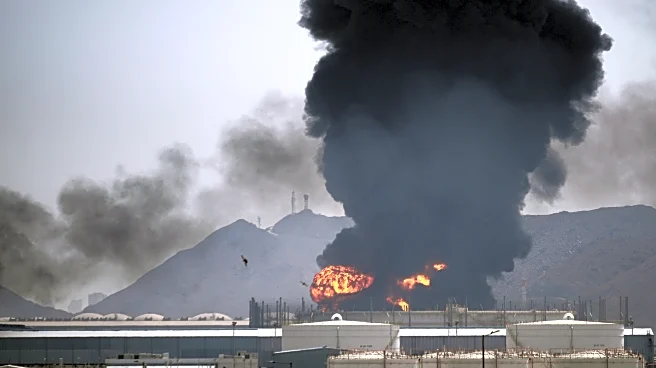
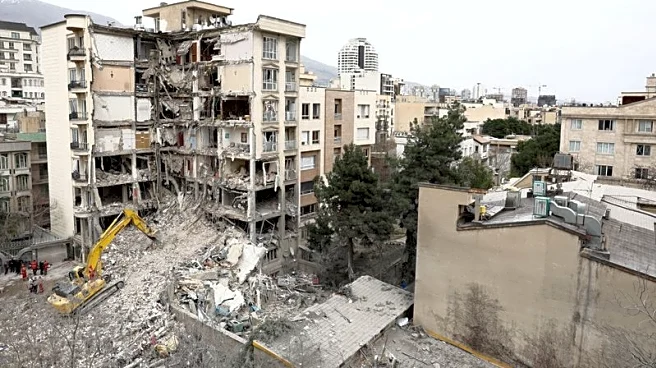
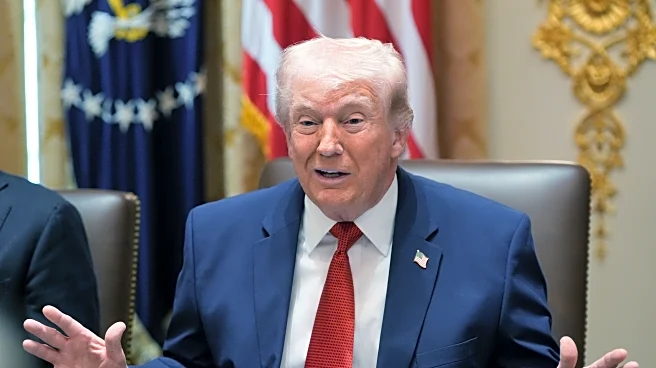
The Trump administration, in collaboration with Israel, has initiated military action against Iran, citing threats from Iran's ballistic missile program and its alleged nuclear weapons development. This conflict has led to significant disruptions in global
oil supply, as the Strait of Hormuz, a critical chokepoint for oil transportation, faces near-closure. The price of oil has surged from $70 to over $100 per barrel, causing gas prices in the U.S. to approach $4 per gallon. The economic impact is widespread, affecting supply chains for essential goods like helium and fertilizer, which are crucial for semiconductor production and agriculture, respectively. The situation has raised concerns about potential stagflation, reminiscent of the 1970s economic crisis, characterized by high inflation, stagnant economic growth, and rising unemployment.
Why It's Important?
The ongoing conflict and its economic repercussions have significant implications for the U.S. and global economies. The surge in oil prices is likely to drive inflation, prompting central banks to consider raising interest rates, which could lead to a recession. The disruption in supply chains for critical materials like helium and fertilizer could result in higher costs for technology and food production, affecting consumers and industries worldwide. The potential for stagflation poses a severe threat to economic stability, as it combines the challenges of inflation with economic stagnation, making it difficult for policymakers to address effectively. The situation underscores the interconnectedness of global economies and the far-reaching impact of geopolitical conflicts.
What's Next?
The duration of the conflict and its economic impact remain uncertain, largely dependent on the resilience of Iran and the global community's ability to manage the economic fallout. Policymakers and economic stakeholders will need to navigate the delicate balance of addressing inflation without stifling economic growth. The international community may seek diplomatic solutions to de-escalate tensions and stabilize the region. Meanwhile, businesses and consumers will need to adapt to the changing economic landscape, potentially facing higher costs and supply chain disruptions. The situation calls for strategic planning and cooperation among nations to mitigate the adverse effects on the global economy.