



What's Happening?
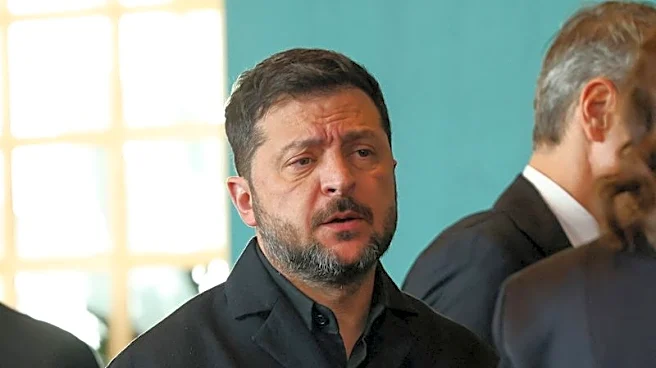
Ukrainian President Volodymyr Zelenskyy recently engaged in separate discussions with Italian Prime Minister Giorgia Meloni and French President Emmanuel Macron. With Prime Minister Meloni, President Zelenskyy focused on Ukraine’s defense needs, particularly
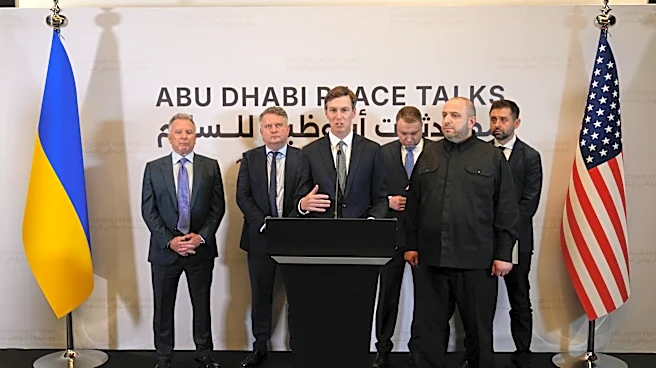
strengthening air defense capabilities and securing missile supplies for the upcoming winter, amidst continued Russian strikes on cities and energy infrastructure. He also discussed the negotiation track, including recent meetings in Abu Dhabi and future diplomatic steps, emphasizing the importance of full European involvement in ending the war and ensuring security guarantees. In his meeting with President Macron, President Zelenskyy coordinated positions ahead of an upcoming meeting of the Coalition of the Willing in Berlin and discussed the results of a multilateral meeting in Dublin, reiterating the need for Europe to be maximally involved in negotiations.
Why It's Important?
These high-level discussions underscore Ukraine's urgent need for continued international support, especially in bolstering its air defense systems against persistent Russian attacks on critical infrastructure. The emphasis on European involvement in peace negotiations and security guarantees highlights Ukraine's desire for a robust, unified front from its European allies, distinct from potential U.S.-led initiatives that might not fully align with its interests. The coordination ahead of the Coalition of the Willing meeting in Berlin signifies ongoing efforts to maintain military and diplomatic momentum. The discussions also reveal the severe humanitarian impact of the conflict, with nearly 700,000 families currently without electricity due to Russian strikes, making the provision of aid and restoration efforts critically important for the civilian population.
What's Next?
Following these discussions, the next steps include the upcoming meeting of the Coalition of the Willing in Berlin, where further coordination on military and diplomatic support for Ukraine is expected. Ukraine will continue to press for strengthened air defense systems and missile supplies, particularly as winter approaches and Russian strikes on energy infrastructure persist. The ongoing negotiation track, including future diplomatic steps and meetings, will likely see increased European involvement, as advocated by President Zelenskyy. The international community will be watching for concrete outcomes from these diplomatic engagements, including commitments for additional aid and a more unified European stance in peace talks, which could influence the trajectory of the conflict and post-war security arrangements.
Beyond the Headlines
Beyond the immediate military and diplomatic concerns, these meetings highlight the complex interplay of national interests and collective security within Europe. Ukraine's insistence on European involvement in peace talks reflects a broader geopolitical shift where European nations are increasingly asserting their role in regional security, potentially seeking to reduce reliance on a single dominant power. The discussions also touch upon the long-term implications for European energy security and infrastructure resilience, as Russia's targeting of these assets forces a re-evaluation of strategic vulnerabilities. The humanitarian crisis caused by power outages further underscores the need for sustainable solutions and international cooperation beyond military aid, encompassing reconstruction efforts and support for affected populations.