



What's Happening?
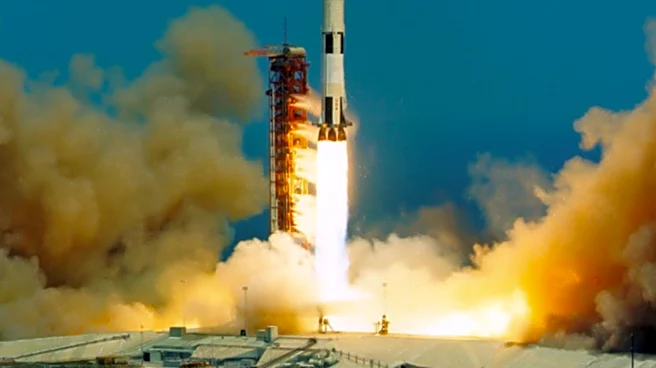
On August 1, 1968, NASA officially canceled the production of its Saturn V moon rocket, a decision driven by significant budget constraints and the financial demands of the Vietnam War. The Saturn V was the only launch vehicle capable of carrying astronauts
beyond low-Earth orbit at the time and was the largest and most powerful rocket ever built. NASA had constructed 15 Saturn V rockets, but only 13 were flown. The decision to halt production came nearly a year before the historic Apollo 11 mission, which saw astronauts walk on the moon for the first time. The last Saturn V launch occurred in 1973, originally intended for the canceled Apollo 18 mission, but instead, it launched the Skylab space station.
Why It's Important?
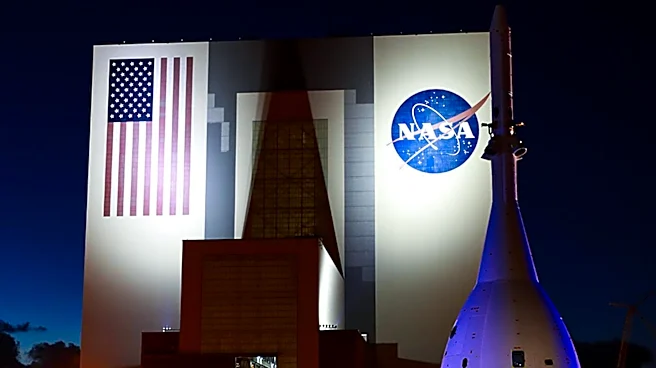
The cessation of Saturn V production marked a pivotal moment in NASA's history, effectively ending the Apollo program's ambitions to send astronauts to the moon. The program had already consumed $9.4 billion, equivalent to approximately $118 billion today. The lack of a continuous supply of heavy-lift rockets limited NASA's ability to conduct further moon missions. The final Saturn V mission carried Apollo 17 astronauts to the moon in 1972, and the last Saturn IB rocket launched the Apollo-Soyuz mission in 1975. It wasn't until 2022 that NASA launched another megarocket, the Space Launch System, for the Artemis I mission, signaling a new era of lunar exploration.
What's Next?
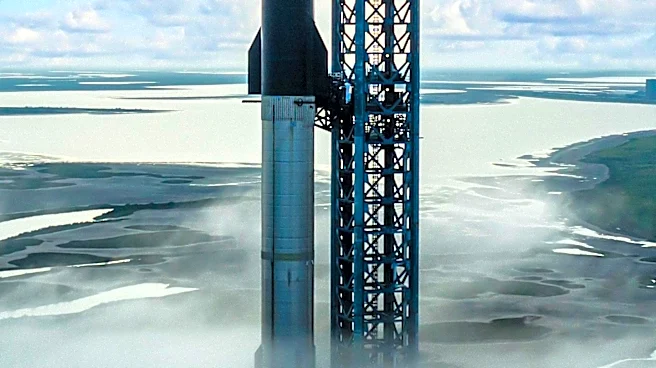
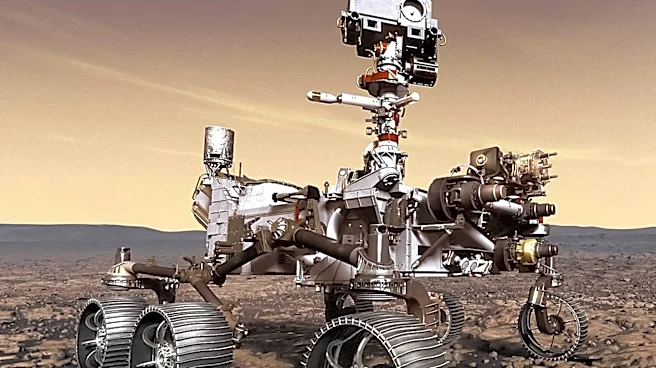
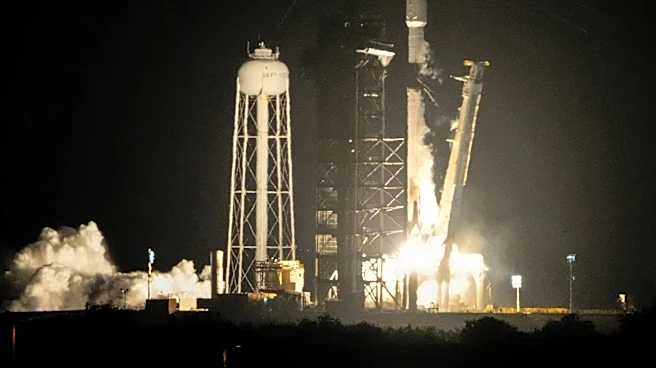
The decision to end Saturn V production had long-term implications for NASA's space exploration capabilities. The agency had to wait decades before developing another rocket of similar power. The recent development of SpaceX's Starship and Super Heavy booster, which surpasses the Saturn V in power, represents a significant advancement in space technology. These new developments are part of NASA's Artemis program, which aims to return humans to the moon and eventually send astronauts to Mars, marking a new chapter in space exploration.