







What's Happening?
Yemen's Iran-backed Houthi rebels are reportedly attempting to develop a new advanced medium-range ballistic missile system using components sourced from China. A report by the U.K.-based Conflict Armament Research group indicates that the Houthis have
been trying to acquire key parts from Chinese suppliers to produce a version of Iran’s Kheibar Shekan precision-guided missile, which has a range of approximately 1,200 miles (2,000 kilometers). Yemeni government authorities intercepted two shipments in July that originated from China and were destined for Hodeidah, a Yemeni port. These shipments contained missile components such as stabilizing fin cores, rocket motor aft closures with nozzle attachments, rocket motor igniters, and phenolic resin, a material used for ablative heat shields in ballistic missiles. Experts suggest that while the Houthis still rely on Iran for more sophisticated guidance systems, they have expanded their domestic manufacturing and assembly capabilities.
Why It's Important?
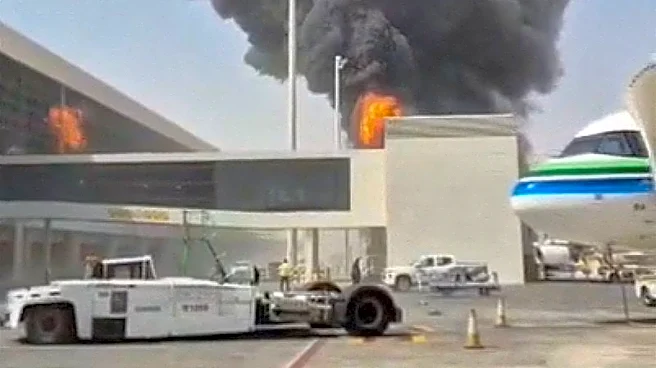
This development signifies a potential increase in the Houthi rebels' military independence and their ability to project power more precisely within the region. The acquisition of Chinese components for advanced missile production could enable the Houthis to more effectively target Saudi Arabia and Israel, posing a significant threat to regional stability. The use of maneuverable warheads and long-range drones has already allowed the Houthis to penetrate Saudi air defense systems, as evidenced by recent strikes on Riyadh's international airport. If the Houthis successfully produce these advanced missiles, it could escalate the conflict, potentially drawing in more international actors and further destabilizing the Middle East. The involvement of Chinese-manufactured components also raises questions about global supply chain oversight and the potential for dual-use technologies to be diverted for military purposes by non-state actors.
What's Next?
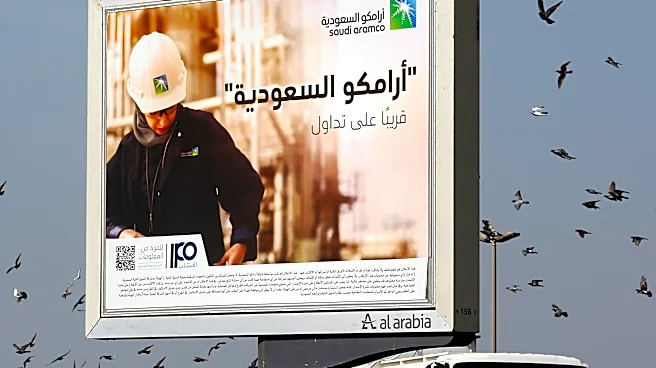
The Yemeni government has already engaged with Beijing regarding the alleged use of Chinese technology by the Houthis for weapons, with Chinese officials expressing willingness to investigate. This suggests potential diplomatic pressure on China to enhance controls over the export of dual-use items. The ongoing conflict between the Houthis and Saudi Arabia is likely to intensify, especially if the rebels' missile capabilities advance. Saudi Arabia, which has reportedly been running low on interceptor missiles, may face increased pressure to bolster its defenses or seek more robust international support. The Houthis have stated their intention to continue targeting Saudi oil facilities and airports, indicating a prolonged period of heightened tensions and potential for further attacks. The international community will likely monitor these developments closely, given the implications for regional security and global shipping routes.
Beyond the Headlines
The Houthis' pursuit of advanced missile technology, particularly with components from China, highlights a broader trend of non-state actors leveraging global supply chains to enhance their military capabilities. This situation underscores the challenges in controlling the proliferation of sophisticated weaponry and the difficulty in preventing the diversion of commercial goods for military applications. The increasing independence of the Houthis in weapon manufacturing, even with external components, could alter the dynamics of proxy conflicts, making them less reliant on direct state sponsorship for certain capabilities. Furthermore, the potential for these advanced missiles to be used against critical infrastructure, such as oil facilities and airports, raises significant concerns about economic disruption and civilian casualties, pushing the conflict beyond traditional battlefields into civilian centers and vital economic arteries.