






What's Happening?
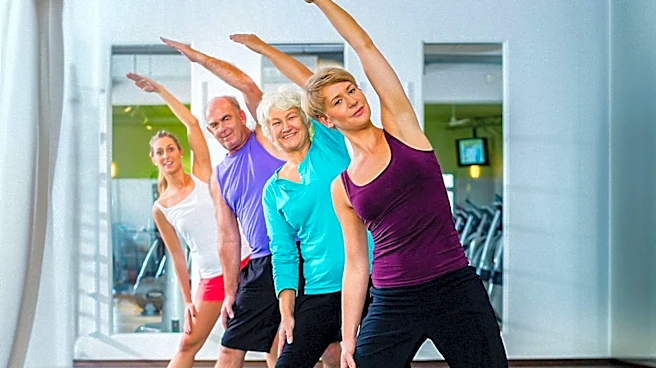
A recent randomized controlled trial conducted by Penn State, known as FAST-2, has demonstrated that a simple four-minute daily exercise routine can significantly improve functional performance in inactive adults aged 65 and older. The study, published
in PLOS One, involved 97 participants with an average age of 74, who reported difficulty walking a quarter mile and engaged in less than 60 minutes of activity per week. The exercise group performed four exercises—push-ups, chair stands, two-arm rows with a resistance band, and stair stepping—for 30 seconds each, followed by 30 seconds of rest, seven days a week. After 12 weeks, participants in the exercise group showed marked improvements, including 4.2 more chair stands in 30 seconds, holding a one-legged stance 3.6 seconds longer, and reducing their five-times sit-to-stand time by 2.3 seconds compared to the control group. These improvements met the threshold for a 'minimum clinically important difference,' indicating a meaningful impact on daily life.
Why It's Important?
This study is important because it offers a highly accessible and time-efficient method for older adults to improve their mobility and functional strength, directly addressing common barriers to exercise such as time constraints and perceived complexity. The ability to perform chair stands and maintain balance is crucial for independent living and is a strong predictor of future falls, walking difficulties, and the need for care. With the Centers for Disease Control and Prevention (CDC) reporting approximately 37 million falls annually among adults 65 and older, leading to significant injuries and deaths, interventions that enhance these capabilities have substantial public health implications. By demonstrating that a minimal daily commitment can yield clinically significant results, the study provides a practical pathway for a large segment of the senior population to enhance their physical well-being, potentially reducing healthcare burdens and improving overall quality of life.
What's Next?
The findings suggest that healthcare providers and community programs could integrate this four-minute routine into recommendations for older adults, particularly those who are inactive or have mobility challenges. While the study did not measure falls directly, the improvements in key indicators like chair stands and balance tests, which are known predictors of falls, warrant further research into the routine's potential to reduce fall incidence. Future studies could also explore the long-term adherence and broader health impacts of such brief, functional strength training. Individuals interested in adopting this routine are advised to consult their doctor before starting, especially if they have pre-existing health conditions. The study's success in remote coaching via video also highlights the potential for scalable, home-based exercise programs, which could be particularly beneficial for seniors with limited access to gyms or in-person classes.
Beyond the Headlines
The study's emphasis on functional strength training—exercises that mimic everyday movements—underscores a shift in fitness approaches for older adults, moving away from complex gym routines towards practical, life-enhancing activities. The high adherence rate (81% of days completed) and low dropout rate (11%) in the exercise group, compared to the control group, suggest that simplicity and perceived attainability are critical factors in sustaining exercise habits among seniors. This research challenges the notion that significant time commitments are necessary for meaningful physical improvements in older age, potentially empowering a demographic often overlooked in traditional fitness paradigms. The study also implicitly highlights the importance of accessible technology, as remote coaching relied on internet access, pointing to a digital divide that could impact equitable access to such beneficial programs.