
What's Happening?
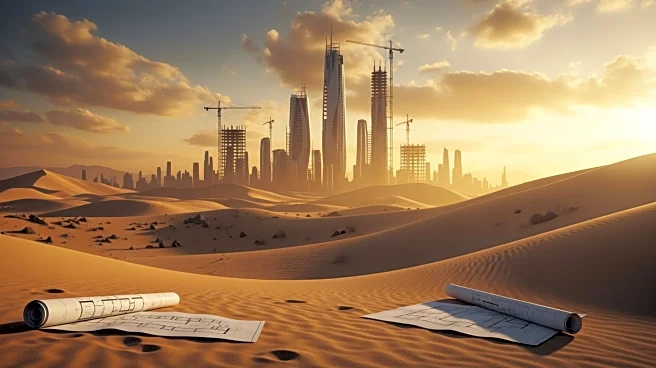
Saudi Arabia's NEOM project, a key component of the kingdom's economic transformation plans, is set to be significantly scaled back and redesigned. This decision follows a year-long internal review that
highlighted delays, cost overruns, and flaws in the project's initial conception and execution. Crown Prince Mohammed bin Salman, who chairs the NEOM project, now envisions a development that is 'far smaller' than originally planned. The project, launched in 2017, stretches along the Red Sea coast and covers an area roughly the size of Belgium. Its most ambitious component, The Line, a proposed 170-kilometer linear city, is expected to be radically scaled back and reimagined. The review, initiated by NEOM's new chief executive Aiman al-Mudaifer, is expected to conclude by the end of the first quarter of this year.
Why It's Important?
The scaling back of the NEOM project reflects a broader shift in Saudi Arabia's approach to its ambitious development plans. The decision to downsize comes as the kingdom faces tighter liquidity and major financial commitments, including preparations for hosting Expo 2030 and the football World Cup in 2034. The Public Investment Fund, which owns NEOM, is under pressure to deliver returns on its vast portfolio of megaprojects. This move signals a growing willingness within the Saudi system to adapt plans to economic realities, rather than persist with projects that are no longer viable at their original scale. The changes could also impact Saudi Arabia's efforts to position itself as a global player in artificial intelligence, as NEOM may pivot towards becoming a hub for data centers.
What's Next?
The review of the NEOM project is expected to conclude soon, and the outcomes could lead to further adjustments in Saudi Arabia's development strategies. The kingdom may continue to reassess its spending priorities and focus on projects that align with national objectives and long-term value creation. The downsizing of NEOM could also influence other high-profile components of the project, such as the Trojena ski resort and the Oxagon industrial zone. As Saudi Arabia recalibrates its spending, it may also explore new opportunities to attract foreign investment and partnerships to support its economic transformation goals.