

What's Happening?
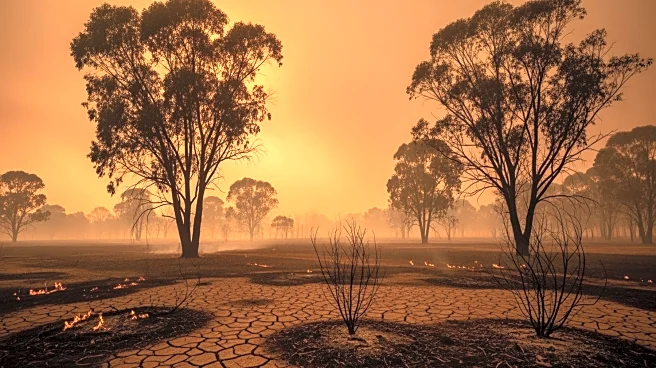
In the Australian state of Victoria, bushfires have left three people unaccounted for as they continue to devastate the region. The fires, which began on Wednesday, have been fueled by an intense heatwave, creating the worst fire conditions since the 2019
Black Summer. Victoria's Emergency Management Commissioner, Tim Wiebusch, reported that firefighters are currently battling 30 active blazes, with the fire danger rating reaching 'catastrophic' levels. The largest fire near Longwood has destroyed over 35,000 hectares of bushland, including homes and community infrastructure. Authorities have warned that the combination of damaging winds and high temperatures makes the fires 'undefendable.' Two adults and a child are missing after being advised to shelter in their home, which was later found destroyed. The Walwa fire has also burned through a pine plantation, although no property losses have been reported there.
Why It's Important?
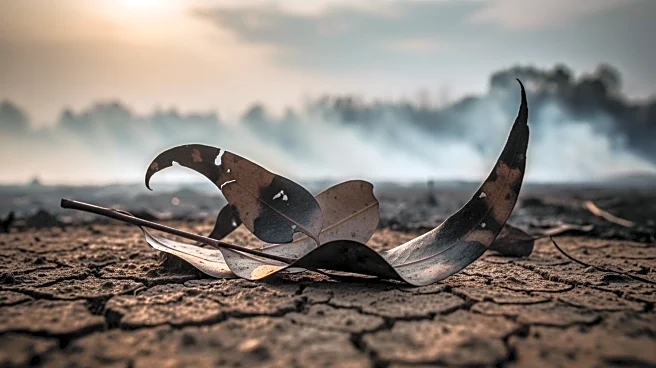
The ongoing bushfires in Victoria highlight the increasing frequency and intensity of natural disasters, exacerbated by climate change. These fires not only pose immediate threats to human life and property but also have long-term environmental impacts, including habitat destruction and air quality deterioration. The situation underscores the need for enhanced disaster preparedness and response strategies, as well as global efforts to address climate change. The fires also serve as a stark reminder of the vulnerability of communities in fire-prone areas, prompting discussions on urban planning and resource allocation for emergency services. The economic implications are significant, with potential losses in agriculture, tourism, and infrastructure, affecting both local and national economies.
What's Next?
Authorities in Victoria are likely to continue focusing on firefighting efforts and ensuring the safety of residents in affected areas. Evacuations and road closures are expected to persist as conditions remain hazardous. In the aftermath, there will be assessments of the damage and discussions on rebuilding efforts. The Australian government may face increased pressure to implement stronger climate policies and invest in fire prevention and management technologies. Internationally, the fires could influence climate policy debates, emphasizing the need for coordinated global action to mitigate the effects of climate change.
Beyond the Headlines
The bushfires in Victoria may lead to a reevaluation of land management practices, including controlled burns and vegetation management, to reduce future fire risks. There could also be a shift in public perception regarding climate change, with increased advocacy for sustainable practices and renewable energy adoption. The cultural impact is significant, as communities grapple with the loss of homes and heritage sites. Additionally, the fires may prompt legal and ethical discussions about government accountability and the adequacy of current environmental policies.