







What's Happening?
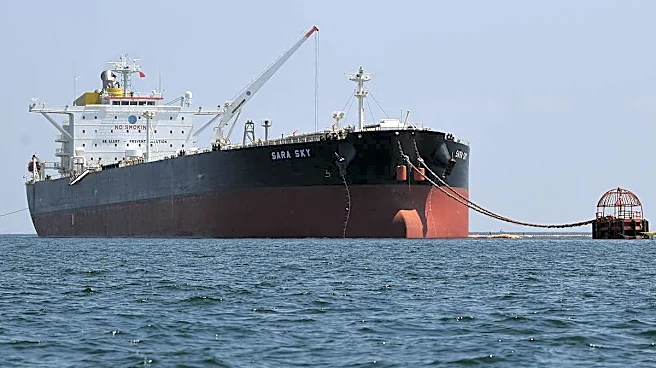
The offshore sector in the Middle East is experiencing significant structural risks due to ongoing regional tensions. The closure of the Strait of Hormuz (SoH) has led to a halt in the movement of newbuild vessels, which are now waiting in the Gulf of Oman.
This situation has forced some vessel owners to seek opportunities in alternative markets such as India and Southeast Asia. The conflict has also resulted in the suspension or termination of contracts for offshore support vessels (OSVs) in key countries like Saudi Arabia, the UAE, and Qatar. Rising insurance and crew costs, driven by increased war premiums, have further exacerbated the situation, with insurance costs reportedly increasing up to tenfold. Additionally, the inability to transport structures and equipment into the Middle East Gulf has stalled construction projects, leading to increased equipment costs for vessel repairs.
Why It's Important?
The current situation poses a significant threat to the offshore oil and gas industry in the Middle East, a region critical to global energy supply. The disruption in vessel movement and construction projects could lead to delays in energy production and increased operational costs. This could have a ripple effect on global oil prices, potentially impacting economies worldwide. The increased insurance costs and contract terminations also highlight the financial strain on companies operating in the region, which may lead to a reevaluation of risk management strategies. The ability of Saudi Arabia to reroute exports through alternative infrastructure may mitigate some impacts, but the overall uncertainty could deter future investments in the region.
What's Next?
The reopening of the Strait of Hormuz is crucial for the resumption of normal operations in the Middle East offshore sector. Until then, companies may continue to explore alternative markets to mitigate losses. The industry will likely focus on negotiating new insurance terms and exploring cost-effective strategies to manage rising expenses. Stakeholders, including governments and energy companies, may engage in diplomatic efforts to stabilize the region and ensure the security of energy supply routes. The situation underscores the need for robust contingency planning and diversification of supply chains to withstand geopolitical disruptions.