
What's Happening?
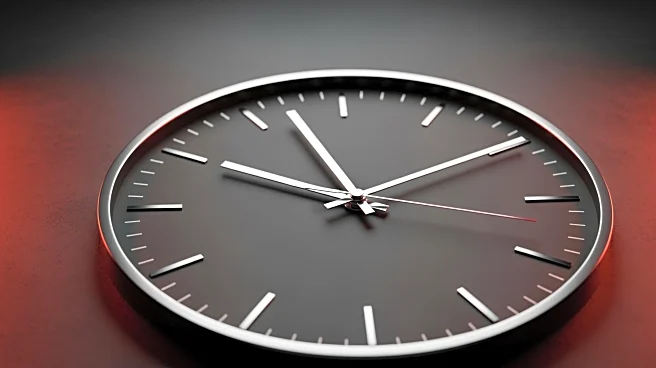
The Bulletin of the Atomic Scientists has adjusted the Doomsday Clock to 85 seconds before midnight, marking the closest it has ever been to a symbolic global catastrophe. This adjustment reflects heightened
concerns over nuclear weapons, climate change, and biological threats. The Doomsday Clock, established in 1947 by prominent scientists including Albert Einstein and J. Robert Oppenheimer, serves as a metaphorical warning about the dangers posed by human-made technologies. Historically, the clock has been adjusted numerous times, with the farthest setting being 17 minutes to midnight in 1991 following nuclear arms reductions by the U.S. and the Soviet Union. The current setting is four seconds closer to midnight than in 2025, indicating an increased urgency in addressing these global threats.
Why It's Important?
The adjustment of the Doomsday Clock underscores the growing urgency of addressing existential threats to humanity. The closer proximity to midnight highlights the increasing risks posed by nuclear proliferation, climate change, and emerging biological threats. This serves as a call to action for global leaders and policymakers to prioritize efforts in mitigating these dangers. The clock's setting acts as a barometer for the international community, emphasizing the need for cooperative strategies to prevent potential global disasters. The implications are significant for international relations, security policies, and environmental strategies, as failure to address these issues could lead to catastrophic consequences.
What's Next?
The new setting of the Doomsday Clock is likely to prompt discussions among global leaders and policymakers about strategies to mitigate the highlighted risks. It may lead to renewed efforts in nuclear disarmament, climate action, and biosecurity measures. The international community may see increased pressure to collaborate on treaties and agreements aimed at reducing these threats. Additionally, public awareness campaigns and educational initiatives could be launched to inform citizens about the importance of addressing these global challenges. The clock's adjustment serves as a catalyst for action, urging stakeholders to prioritize sustainable and secure futures.