



What's Happening?
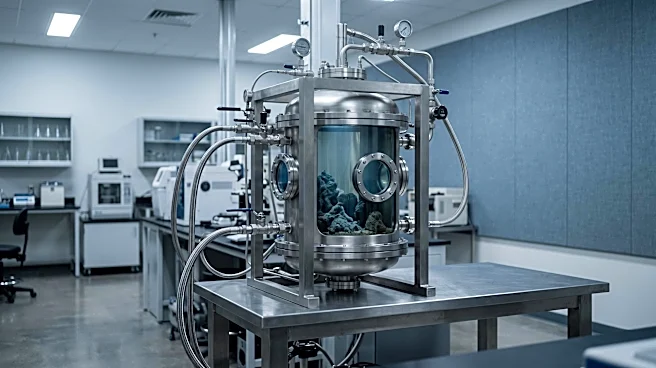
Raymond Lee, a researcher at Washington State University, constructed a high-pressure aquarium in 2006. This specialized apparatus was designed to study deep-sea organisms, particularly their behavior and survival in extreme environments. The aquarium allowed
scientists to replicate the intense pressure and temperature gradients found near hydrothermal vents on the ocean floor. In experiments conducted using this equipment, Lee and his colleague Peter Girguis of Harvard observed the behavior of sulfide worms (Paralvinella sulfincola). These worms, found on sulfide chimneys along the Juan de Fuca Ridge, were placed in the aquarium with a steep temperature gradient. The research revealed that the worms actively sought out and settled in areas with temperatures ranging from 104 to 122 degrees Fahrenheit, a heat level that would be lethal to most other organisms. This preference is attributed to the abundance of bacterial mats, their primary food source, which thrive in these specific hot conditions.
Why It's Important?
The development of the high-pressure aquarium by Raymond Lee and the subsequent research significantly advanced the understanding of extremophile biology. By simulating deep-sea conditions in a controlled laboratory setting, scientists can directly observe and analyze the physiological adaptations that allow certain species to survive in environments previously thought to be uninhabitable. This research is crucial for marine biology, providing insights into the biodiversity of deep-sea ecosystems and the unique evolutionary strategies employed by organisms living near hydrothermal vents. Understanding these adaptations could have broader implications for biotechnology and astrobiology, as it expands the known limits of life and offers clues about potential life forms on other planets or moons with similar extreme conditions. The ability to study these creatures in a controlled environment also helps in assessing the impact of environmental changes on these fragile ecosystems.
What's Next?
Future research building upon Raymond Lee's work with the high-pressure aquarium could involve further investigation into the biochemical mechanisms that enable extremophiles to tolerate high temperatures and pressures. Scientists may explore the unique proteins and enzymes that function under these conditions, potentially leading to discoveries with applications in industrial processes or medicine. The aquarium could also be used to study the reproductive cycles and community interactions of deep-sea organisms, providing a more complete picture of their life histories. Additionally, as deep-sea exploration continues, new species are likely to be discovered, and the high-pressure aquarium will remain an invaluable tool for understanding their biology and ecological roles. Continued monitoring of hydrothermal vent ecosystems, combined with laboratory studies, will be essential for conservation efforts and for understanding the long-term resilience of these unique biological communities.
Beyond the Headlines
The research facilitated by Raymond Lee's high-pressure aquarium delves into fundamental questions about the origins and limits of life. The existence of complex ecosystems thriving in such extreme conditions challenges conventional notions of habitability and highlights the incredible adaptability of life on Earth. This work has ethical implications regarding deep-sea mining and other human activities that could disturb these unique environments, emphasizing the need for careful consideration and regulation. Culturally, these discoveries inspire a sense of wonder and curiosity about the unexplored depths of our planet and beyond, influencing scientific narratives and public perception of life's potential. The technological innovation of creating such a specialized research tool also underscores the importance of engineering in advancing scientific understanding, bridging the gap between theoretical questions and empirical observation in challenging fields like oceanography.