






What's Happening?
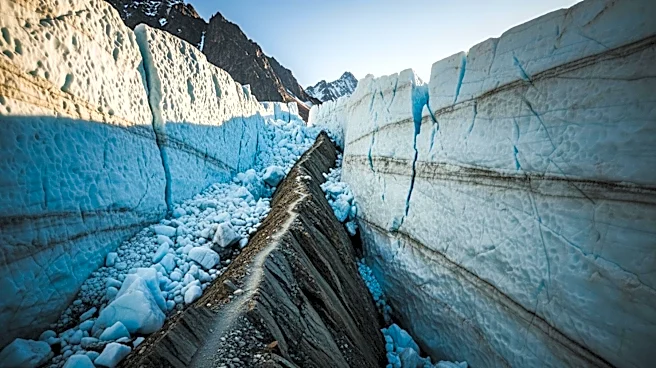
Tensions have risen among Everest expedition leaders due to conflicting reports from Sherpa teams regarding the safety of a new route through the Khumbu Icefall. A giant serac has blocked the traditional path to Camp 1, prompting efforts to find an alternative.
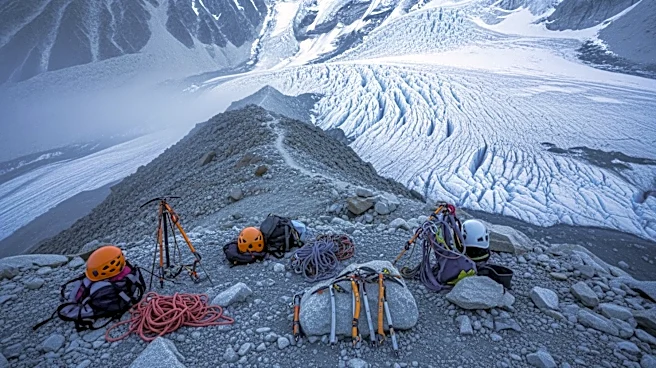
Two official Sherpa teams, assigned by the Sagarmatha Pollution Control Committee and the Expedition Operators Association, failed to secure a new route. However, an unofficial group of Sherpas, along with Polish skier Bartek Ziemski, claims to have nearly completed a safe path. Meanwhile, authorities have permitted helicopters to transport gear and personnel to Camp 1, a move that could set a precedent for future expeditions. This decision aims to expedite the acclimatization process for climbers waiting at Base Camp, as the monsoon season approaches.
Why It's Important?
The development is significant as it highlights the ongoing challenges and risks associated with climbing Mount Everest, particularly through the dangerous Khumbu Icefall. The use of helicopters, typically restricted, could change the logistics of future expeditions, potentially reducing the time and risk involved in reaching higher camps. This situation also underscores the economic and cultural importance of Everest expeditions to Nepal, as delays and safety concerns can impact the local economy and the global climbing community. The conflicting reports from Sherpa teams may affect trust and coordination among expedition leaders, influencing future climbing strategies and safety protocols.
What's Next?
If the new route is confirmed safe, climbers will begin their acclimatization, potentially leading to traffic jams on the ropes. Authorities may extend the climbing season to accommodate delays, but the onset of the monsoon in early June will ultimately dictate the timeline. The use of helicopters could become a standard practice if proven effective, though it may face opposition from traditionalists and environmentalists concerned about the impact on the mountain's ecosystem.