






What's Happening?
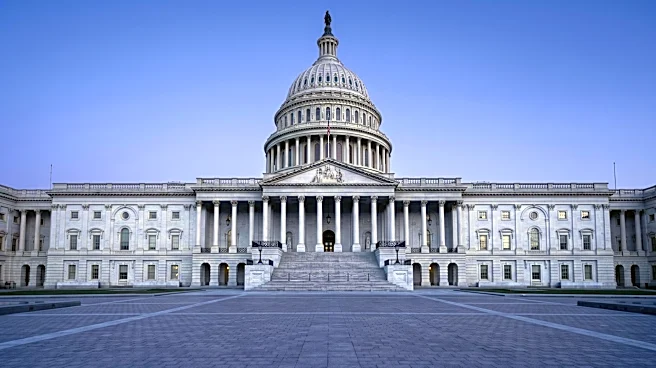
The Government Accountability Office (GAO) has issued a report indicating that federal agencies are not adequately prepared for the emergence of cryptographically relevant quantum computers (CRQCs). These advanced quantum computers, anticipated to be
developed by the 2030s, could potentially break current federal encryption methods, leaving sensitive government data vulnerable. The GAO's evaluation framework identified three critical practices that agencies should implement: establishing cryptography expertise, developing comprehensive inventories of cryptographic systems, and creating detailed plans for testing quantum-resistant algorithms. However, the GAO found that none of the 24 Chief Financial Officer Act agencies had fully implemented these essential practices. This lack of foundational preparedness leaves agencies ill-equipped to defend against potential quantum attacks, which could compromise user authentication systems, grant unauthorized access to sensitive information, and decrypt previously acquired data.
Why It's Important?
The GAO's findings highlight a significant national security and data privacy risk. The potential for CRQCs to compromise federal encryption poses a severe threat to the confidentiality, integrity, and availability of sensitive government information. This includes national security data, economic intelligence, and personal data of U.S. citizens. A successful quantum attack could lead to widespread data breaches, espionage, and disruption of critical infrastructure. The lack of preparedness across federal agencies means that the U.S. government could be vulnerable to adversaries who develop quantum computing capabilities first. The transition to quantum-resistant cryptography is a complex and time-consuming process, requiring substantial investment in research, development, and implementation. Delays in addressing this threat could have long-lasting and detrimental consequences for national security and public trust in government data protection.
What's Next?
The GAO's report includes 89 recommendations to 23 agencies, urging them to establish and implement processes for developing cryptography inventories and identifying funding for post-quantum cryptography. While 12 agencies agreed with these recommendations, others partially agreed, neither agreed nor disagreed, or disagreed with some recommendations. The GAO maintains that all recommendations are warranted, emphasizing the immediate need for action. Federal agencies are expected to prioritize building cryptography expertise, conducting thorough inventories of their cryptographic systems, and developing robust plans for testing and deploying quantum-resistant algorithms. Congress may also increase oversight and allocate specific funding to accelerate the transition to post-quantum cryptography across government. The National Institute of Standards and Technology (NIST) will continue its work in standardizing quantum-resistant cryptographic algorithms, which agencies will need to adopt.
Beyond the Headlines
The threat of quantum computing extends beyond immediate data security to broader implications for digital trust and global power dynamics. The race to develop and implement quantum-resistant cryptography is a critical component of cybersecurity in the 21st century. Nations that lead in this area will have a significant strategic advantage, both in terms of protecting their own sensitive information and potentially exploiting vulnerabilities in less prepared adversaries. This situation also underscores the need for continuous innovation in cybersecurity and the challenges of anticipating and mitigating future technological threats. The transition to post-quantum cryptography will require a fundamental shift in how data is secured, impacting not only government but also critical private sector infrastructure, financial systems, and personal communications. The GAO's report serves as a stark reminder that proactive measures are essential to maintain digital sovereignty and security in an evolving technological landscape.