







What's Happening?
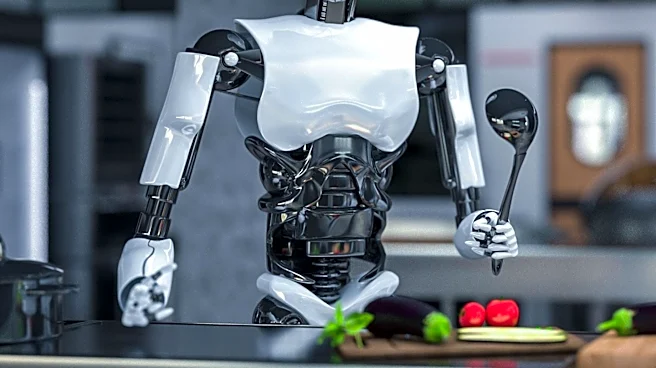
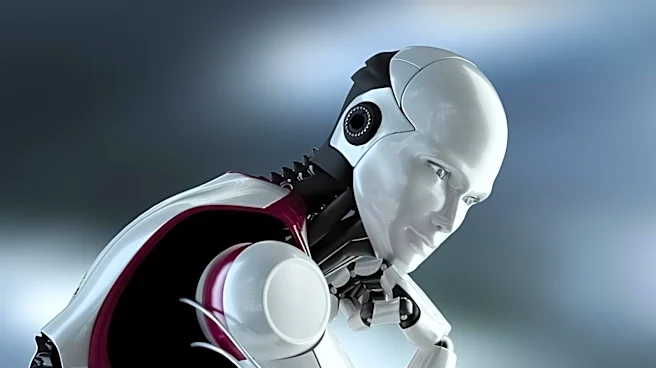
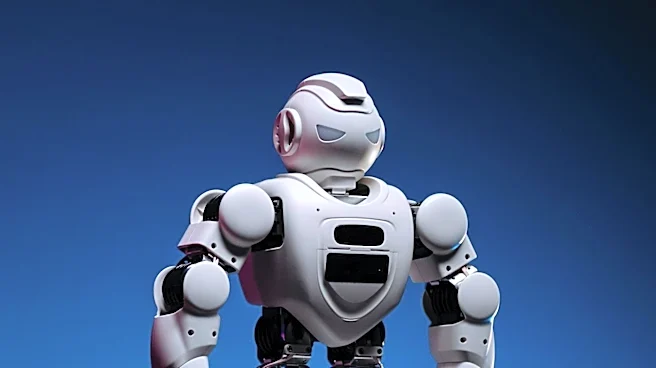
China's humanoid robots have gained global attention, but a burgeoning rental market is revealing their current limitations. Despite their popularity, these robots are not yet capable of replacing human labor in many tasks. The rental market, driven by
entrepreneurs like Ai Lin, offers humanoids for events and exhibitions, but the technology remains in its infancy. Beijing is investing heavily in humanoid robots, aiming to deploy them in various high-value scenarios. However, the industry faces challenges such as the need for vast amounts of physical-world data and hardware constraints, which limit the robots' capabilities.
Why It's Important?
The development and deployment of humanoid robots in China represent a strategic move to enhance productivity and maintain economic growth amid a shrinking workforce. This initiative could position China as a leader in artificial intelligence and advanced technology, potentially outpacing competitors like the U.S. The rental market serves as a testing ground for real-world applications, highlighting the gap between current capabilities and future potential. As the industry evolves, it could lead to significant advancements in robotics, impacting various sectors and driving economic growth.
What's Next?
China's focus on humanoid robots suggests continued investment and development in this field. The government aims to accelerate deployment in high-value scenarios, which could lead to broader adoption and integration into everyday life. However, overcoming current technological limitations will be crucial for achieving these goals. The industry may see consolidation around major players, with smaller companies relying on government support. As technology advances, the potential for humanoid robots to transform industries and society remains significant.