



What's Happening?
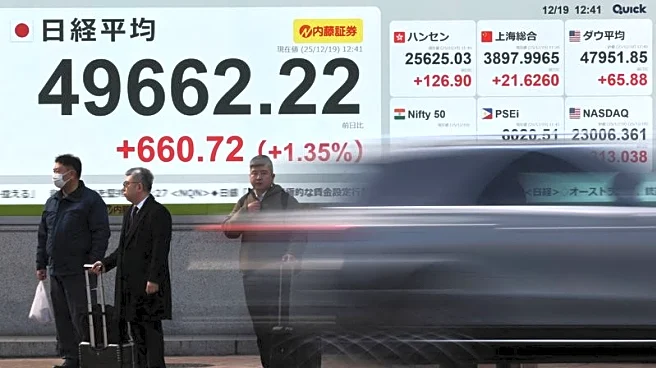
The Nikkei 225, Tokyo's benchmark stock index, experienced a significant rise, jumping as much as 5% to a record high following the election victory of Prime Minister Sanae Takaichi's ruling party. The Liberal Democratic Party (LDP) secured a two-thirds
supermajority in the parliamentary election, marking a substantial political shift. This victory provides Takaichi with a stronger mandate to implement market-friendly policies. The election results have been positively received by markets, with other Asian indices also showing gains. The LDP's win is seen as a stabilizing factor, reducing political ambiguity and allowing for more decisive governance. The party's success is the largest since its foundation in 1955, surpassing previous records.
Why It's Important?
The election outcome is significant for Japan's political and economic landscape. With a supermajority, Prime Minister Takaichi can pursue her policy agenda more effectively, potentially leading to economic reforms and increased market confidence. This political stability is likely to attract investment and boost economic growth. The impact extends beyond Japan, as the positive market reaction in Asia could influence global markets. The election results also highlight the importance of political stability in economic performance, as seen by the immediate positive response from the stock market. Stakeholders in the financial sector, both domestically and internationally, stand to benefit from the reduced political uncertainty.
What's Next?
With the election concluded, Prime Minister Takaichi's immediate focus will be on passing a budget bill to address economic challenges such as rising costs and stagnant wages. The LDP's supermajority will facilitate the passage of this and other legislative measures. The government is expected to prioritize economic policies that support growth and address social issues. Market participants will be closely watching the implementation of these policies and their impact on Japan's economic performance. Additionally, the international community will monitor how Japan's political stability influences regional economic dynamics.