





What's Happening?
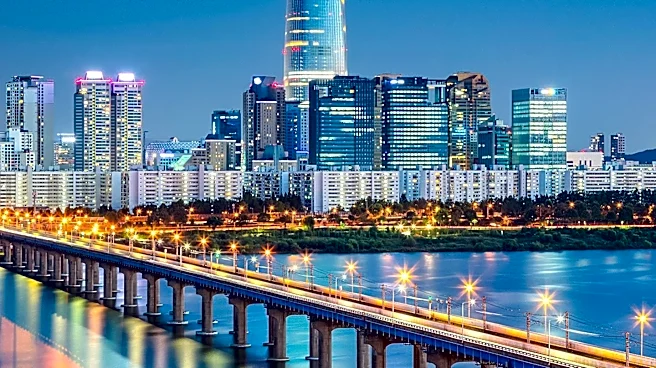
South Korean President Lee Jae Myung has drawn parallels between Japan's real estate crash in the early 1990s and current concerns over South Korea's housing market. During a public discussion, Lee highlighted the potential risks of an overheated real estate market,
referencing Japan's 'lost decades' following a significant market crash. South Korea's real estate accounts for a substantial portion of household wealth, with real assets comprising 75.8% of household assets as of March 2025. Lee's administration is considering revising taxes to stabilize the housing sector, aiming to prevent a similar economic downturn. The South Korean government has been proactive in addressing financial imbalances, unlike Japan before its crash, and is exploring measures to redirect household wealth from real estate to financial markets.
Why It's Important?
The comparison to Japan's economic struggles underscores the potential risks facing South Korea's economy if the real estate market remains unchecked. With a high credit-to-GDP ratio and significant stock market capitalization, South Korea shares some financial characteristics with Japan before its crash. The government's efforts to stabilize the housing market are crucial to prevent a similar economic stagnation. The outcome of these measures could significantly impact South Korea's economic stability and growth, influencing both domestic and international economic relations. The situation also highlights the broader challenges faced by countries with high real estate dependency in household wealth.