



What's Happening?
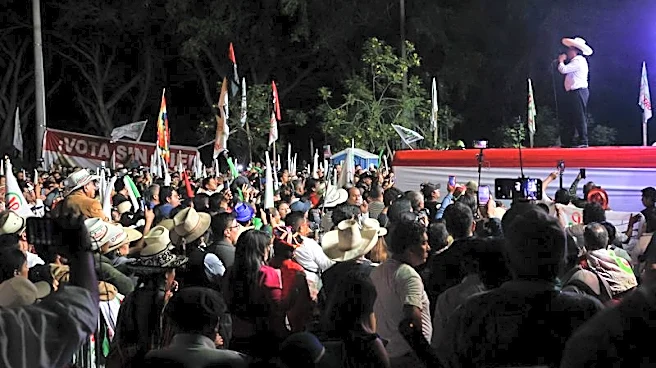
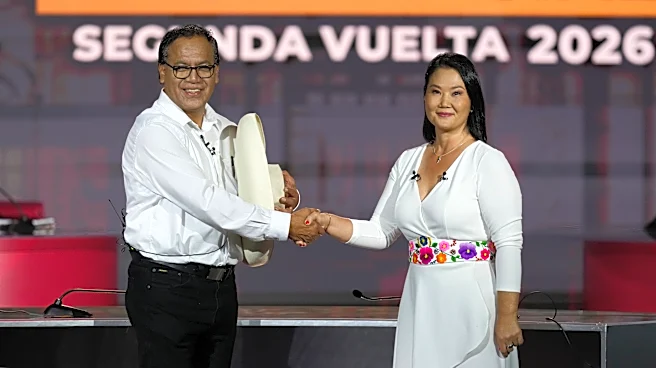
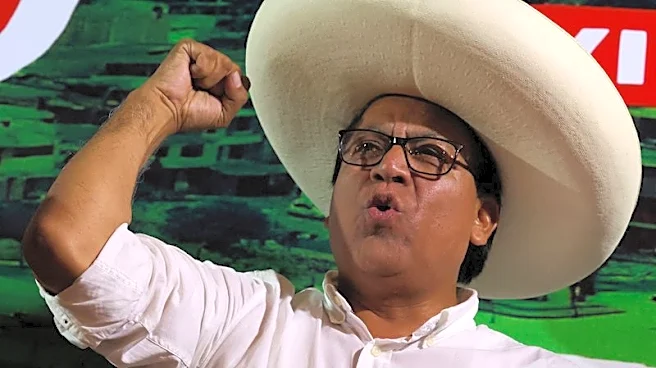
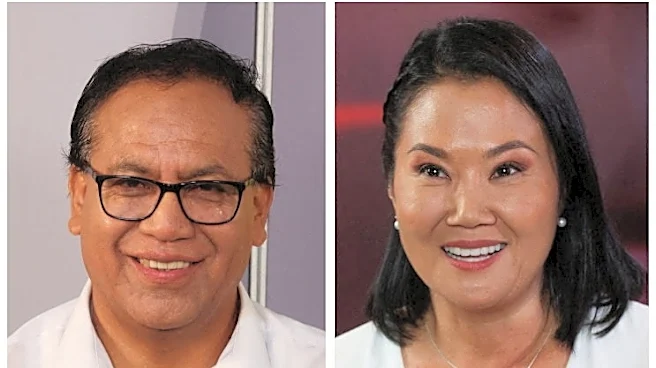
Peruvians are heading to the polls to elect their ninth president in a decade, with crime being a central issue in the election. The candidates, Keiko Fujimori and Roberto Sánchez, present starkly different visions for the country. Fujimori, a conservative
and daughter of a former president, and Sánchez, a nationalist congressman, emerged from a crowded field of 35 candidates in the first round of voting. Neither candidate secured more than 20% of the vote initially, and a significant portion of the electorate remains undecided. The election is taking place against a backdrop of rising crime, particularly extortion, which has become a major concern for voters. Both candidates have focused their campaigns on crime-fighting strategies, with Fujimori advocating for increased police and military presence and Sánchez emphasizing anti-corruption measures within the police force.
Why It's Important?
The outcome of this election could significantly impact Peru's approach to crime and governance. With crime being a top concern, the elected president's policies will likely focus on addressing public safety and organized crime, which has been fueled by illegal mining activities. The election also reflects broader political instability in Peru, as the country has seen frequent changes in leadership over the past decade. The candidates' differing approaches to crime and economic policies, particularly regarding foreign investments, could influence Peru's economic landscape and its relations with international investors. The election results will also be closely watched by the 1.2 million Peruvians voting from abroad, including those in the United States, highlighting the global interest in Peru's political future.
What's Next?
The election results are expected to be close, and it may take days for a clear winner to emerge. If elected, Fujimori plans to implement technology to track extortions and militarize borders, while Sánchez aims to reform the police force and support security efforts with the military. The new president will need to address the public's demand for safety and stability, as well as manage the economic implications of their policies. The international community, particularly investors, will be monitoring the election's outcome and the subsequent policy directions, especially concerning foreign investments and nationalization concerns.