



What's Happening?
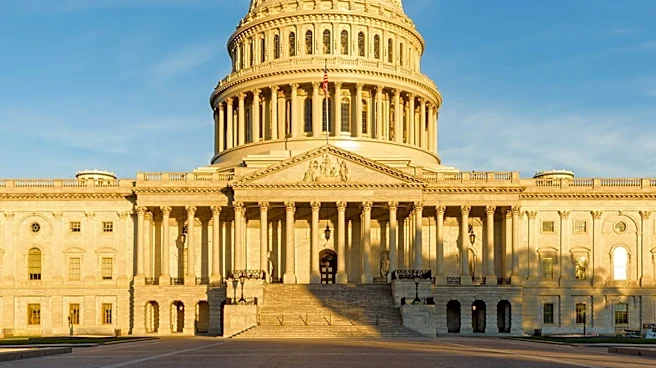
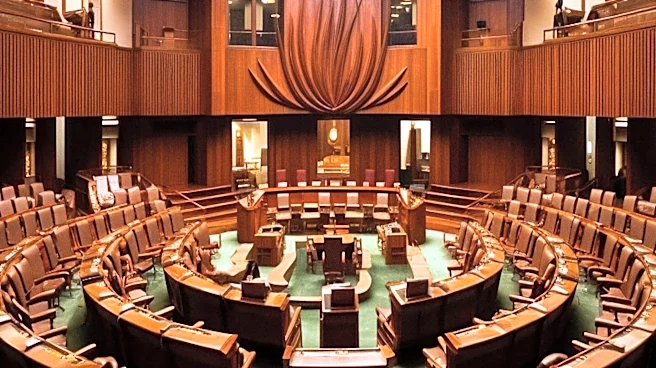
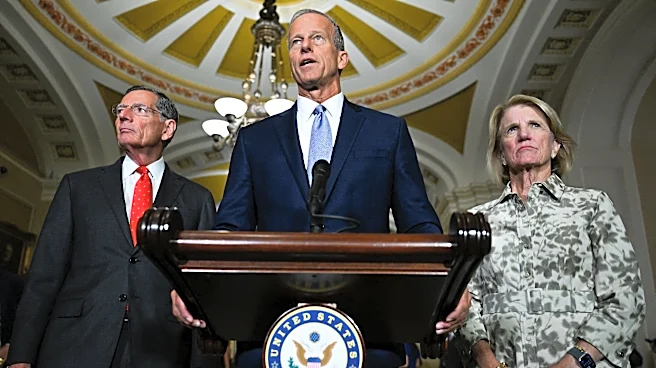
Congress has successfully passed a bipartisan stopgap spending bill, overcoming a major Senate hurdle with an 89-4 vote. The bill, which includes concessions to the minority party, aims to prevent a government shutdown at the end of September when current
appropriations expire. The measure excludes new funding for ICE and pauses a proposed political vetting mechanism for state grants. The bill's passage marks a significant step towards maintaining government operations, though further negotiations will be needed to reconcile House and Senate versions.
Why It's Important?
The passage of the stopgap spending bill is crucial for avoiding a government shutdown, which could have widespread economic and social impacts. The bill's approval reflects a rare moment of bipartisan cooperation in Congress, highlighting the importance of compromise in legislative processes. The outcome of these negotiations will influence government funding and operations, affecting various sectors and stakeholders. The ability to avert a shutdown is essential for maintaining public services and economic stability.
What's Next?
Congress will need to reconcile differences between the House and Senate versions of the stopgap bill before final approval. The outcome of these negotiations will determine the specifics of government funding and any additional concessions. Lawmakers will also need to address longer-term spending measures to ensure continued government operations beyond the stopgap period. The political dynamics surrounding these negotiations will be closely watched, as they may impact future legislative priorities and the balance of power in Congress.