
What's Happening?
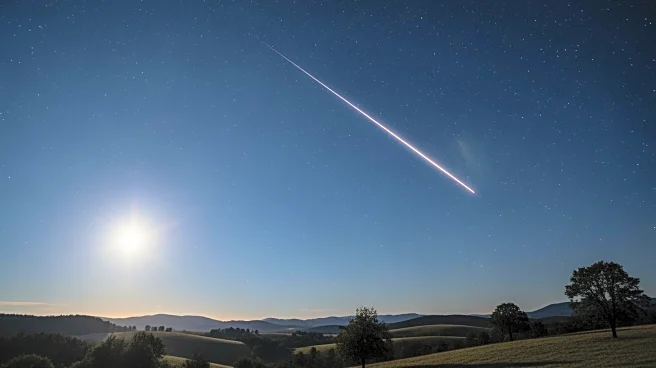
The Orionids meteor shower, one of the most anticipated celestial events of the year, is currently underway and will peak on the evening of October 20 and the morning of October 21. This meteor shower is a result
of Earth passing through the debris trail of Halley's Comet, known for producing bright and fast-traveling meteors. The Orionids are expected to display 10 to 20 meteors per hour under optimal conditions. The best viewing times are between midnight and dawn, with the meteors appearing to radiate from the Orion constellation. To maximize viewing, it is recommended to find a location away from city lights and look towards the eastern sky.
Why It's Important?
Meteor showers like the Orionids provide a unique opportunity for the public to engage with astronomy and appreciate the natural wonders of the universe. This event not only captivates amateur astronomers and stargazers but also serves as an educational moment to learn about comets and their interactions with Earth. The Orionids, being one of the longest-running meteor showers, offer an extended period for observation, making it accessible to a wider audience. The absence of a bright moon during the peak enhances visibility, allowing for a clearer view of the meteors.
What's Next?
Following the Orionids, other meteor showers such as the Draconids and Northern Taurids will also be visible in October and November, respectively. These events continue to provide opportunities for skywatchers to observe meteor activity. As the Orionids peak approaches, weather conditions will play a crucial role in visibility, and enthusiasts are advised to monitor forecasts to plan their viewing sessions accordingly.