





What's Happening?
A federal district court has issued a preliminary injunction against an Indiana law that prohibits the use of student ID cards as valid photo identification for voting. The decision was made by Judge Richard L. Young of the US District Court for the Southern
District of Indiana, who found that the plaintiffs, including the group Count US IN, demonstrated a reasonable likelihood of success in their claim that the law imposes an undue burden on the right to vote. The law, known as SB 10, was challenged on the grounds that it violates the First and 14th Amendments. The court's ruling prevents state officials from enforcing the law until the case is resolved. Indiana had previously accepted student IDs from public universities for nearly two decades before the enactment of SB 10. The plaintiffs argue that the law would prevent students who rely on their IDs and lack alternative identification from voting in upcoming elections.
Why It's Important?
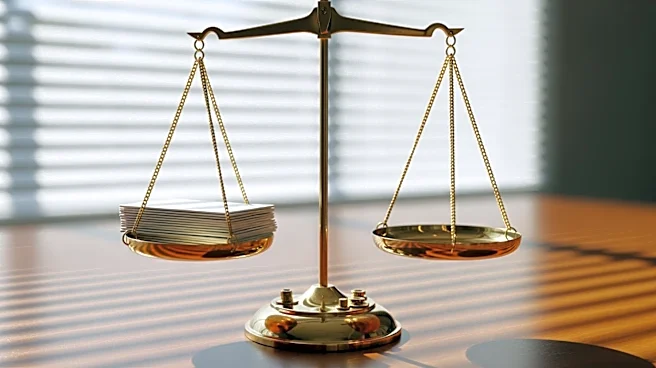
The court's decision to halt the enforcement of SB 10 is significant as it addresses concerns about voter suppression and the accessibility of voting for students. By challenging the law, the plaintiffs highlight the potential disenfranchisement of a key demographic that often relies on student IDs as their primary form of identification. The ruling underscores the ongoing national debate over voter ID laws and their impact on election integrity versus voter accessibility. If the law were enforced, it could set a precedent for other states considering similar restrictions, potentially affecting voter turnout among students and young voters. The case also raises questions about the balance between preventing voter fraud and ensuring that all eligible voters have the opportunity to participate in elections.
What's Next?
The case, Count Us In v. Morales, will continue to be litigated in the courts. As the legal process unfolds, both sides will likely present further evidence and arguments regarding the necessity and impact of SB 10. The outcome of this case could influence future legislation and legal challenges related to voter ID laws across the United States. State officials may seek to provide additional justification for the law or propose alternative measures to address concerns about election integrity. Meanwhile, advocacy groups and civil rights organizations will likely continue to monitor and challenge similar laws that they perceive as restrictive to voter access.