
What's Happening?
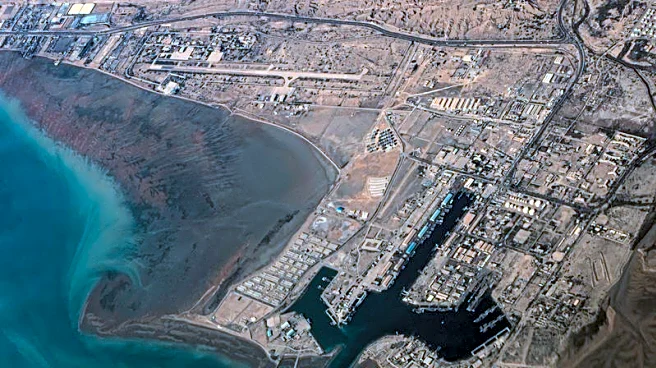
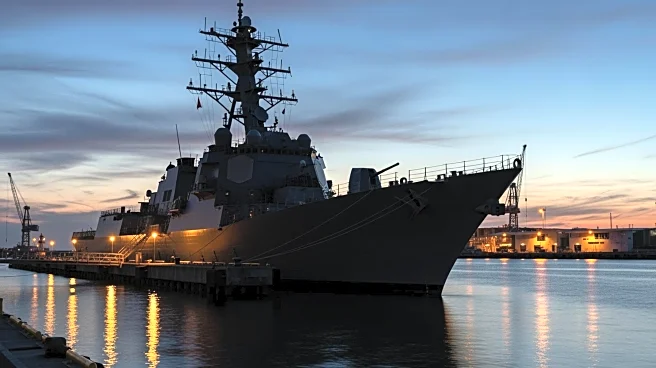
A U.S. Navy destroyer has docked at Israel's Eilat Port, as reported by Israeli media. This move is part of a pre-planned collaboration between the U.S. and Israeli militaries, occurring amidst escalating
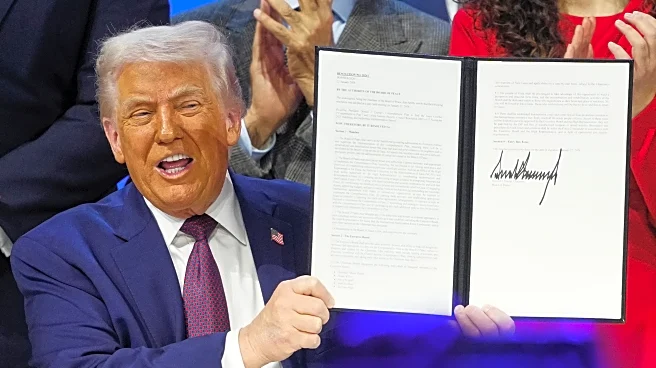
tensions between Washington, D.C., and Iran. The docking at the southern port of the Gulf of Aqaba, near Israel's borders with Egypt and Jordan, underscores the strategic military cooperation between the two nations. President Trump has indicated a willingness to engage in talks with Iran, while also warning of severe actions if Iran does not return to nuclear negotiations. The U.S. military, prioritizing the safety of its servicemen, has refrained from discussing operational details. Meanwhile, Iran has threatened retaliation against the U.S. and its allies if attacked.
Why It's Important?
The docking of a U.S. Navy destroyer in Israel highlights the increasing military presence and strategic alignment between the U.S. and Israel in response to regional threats. This development is significant as it reflects the heightened military readiness and potential for conflict in the Middle East, particularly concerning Iran's nuclear ambitions and regional influence. The U.S.'s show of force serves as a deterrent to Iran, while also reassuring allies in the region of its commitment to their security. The situation could impact global oil markets, regional stability, and international diplomatic efforts aimed at curbing Iran's nuclear program.
What's Next?
The U.S. and Israel are likely to continue strengthening their military cooperation, with potential joint exercises and strategic planning to address various scenarios involving Iran. Diplomatic efforts may intensify, with the U.S. possibly seeking to bring Iran back to the negotiating table. The international community will be closely monitoring the situation, as any military escalation could have far-reaching consequences. Iran's response to the U.S. military presence and its willingness to engage in talks will be critical in determining the next steps in this geopolitical standoff.