


What's Happening?
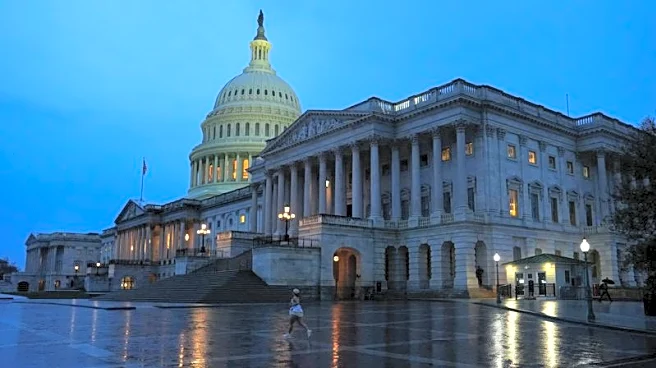
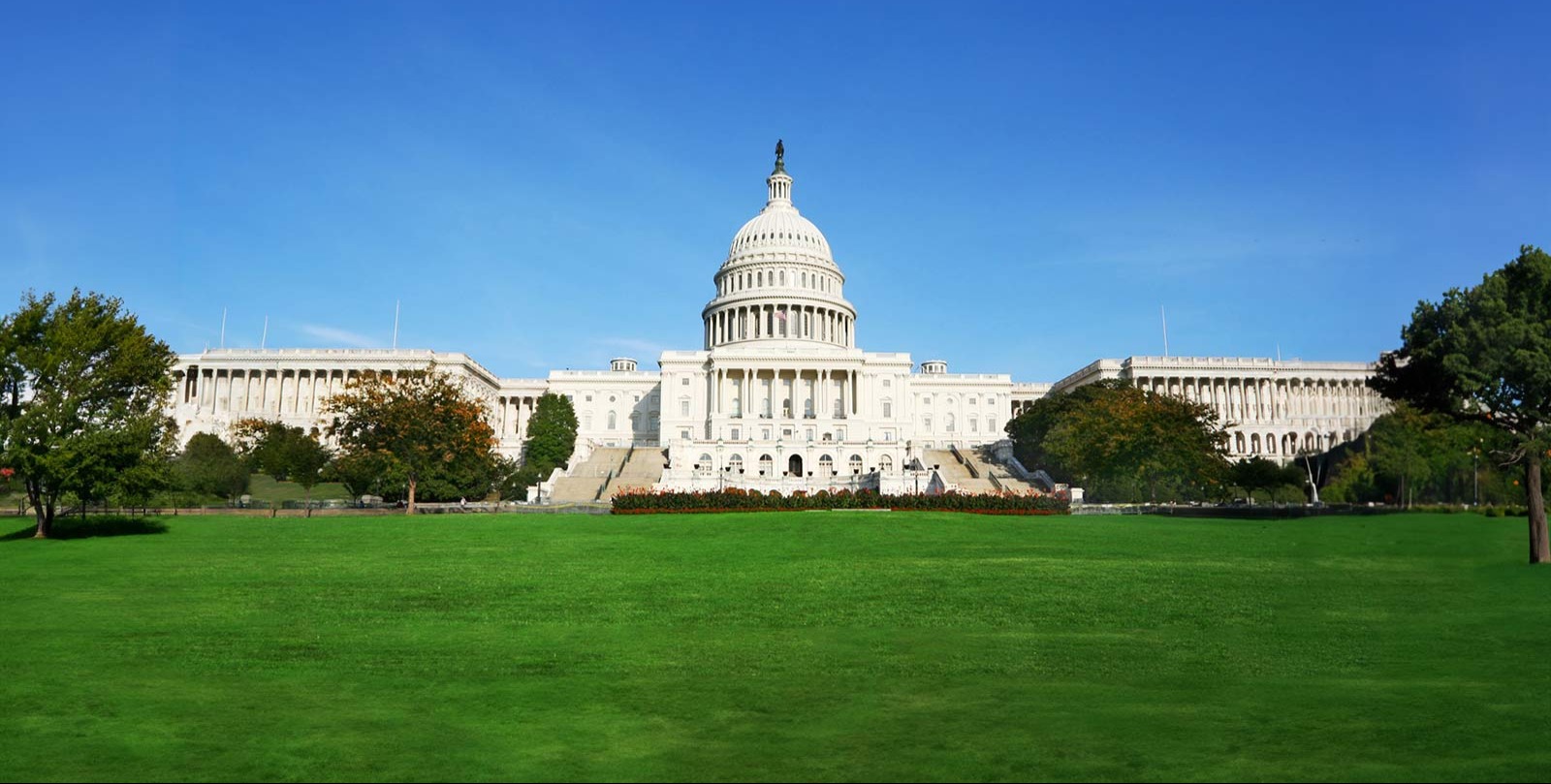
The U.S. Senate has passed a measure to fund most of the Department of Homeland Security (DHS), excluding immigration enforcement and deportation operations, following a 42-day standoff. This decision comes after Democrats refused to support DHS funding
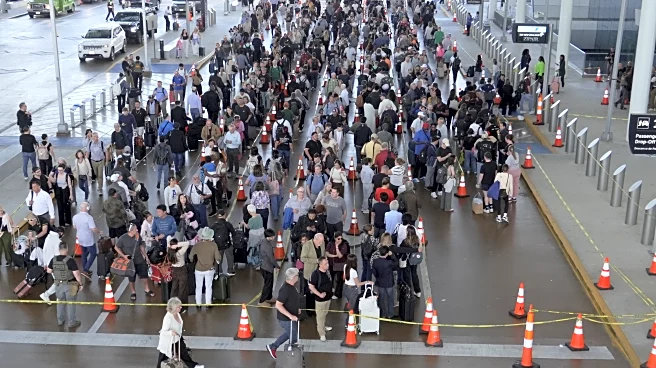
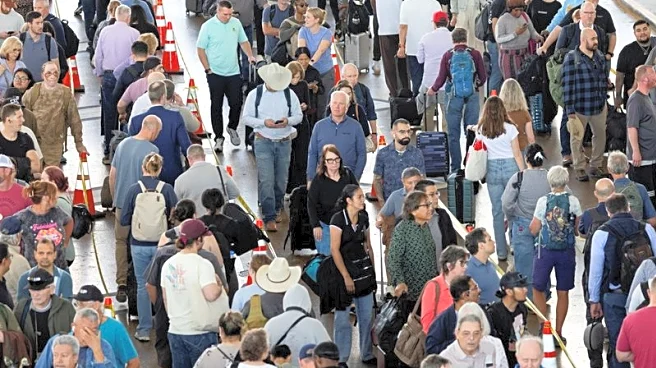
due to objections over immigration enforcement tactics, particularly after federal officers killed two U.S. citizens in Minneapolis. The approved funding will support operations like the Transportation Safety Administration (TSA), the Coast Guard, and the Federal Emergency Management Agency (FEMA). However, divisions such as Immigration and Customs Enforcement (ICE) will not receive additional funding. The funding lapse has forced many DHS employees to work without pay, leading to significant staff shortages and long waits at airports. The legislation now moves to the House for a vote, where its future remains uncertain.
Why It's Important?
The Senate's decision to fund DHS without supporting immigration enforcement highlights ongoing tensions between Democrats and Republicans over immigration policy. This move aims to alleviate the operational strain on essential services like TSA, which has seen high absenteeism and resignations due to the funding gap. The decision underscores the broader political struggle over immigration enforcement tactics, with Democrats seeking reforms and Republicans pushing for comprehensive funding. The outcome of this legislative action could impact national security operations and the efficiency of airport security, affecting millions of travelers. Additionally, the decision reflects the complex negotiations required to balance security needs with political and ethical considerations regarding immigration enforcement.
What's Next?
The House of Representatives will now consider the Senate's funding measure. House Speaker Mike Johnson has expressed opposition to the piecemeal funding approach, calling it 'shameful' to leave parts of DHS unfunded. The outcome in the House is uncertain, and any decision will likely influence future negotiations on immigration enforcement and DHS funding. Meanwhile, President Trump has announced plans to declare a national emergency to pay TSA agents, though the legality and funding source for this action remain unclear. Congress is set to recess for two weeks, leaving unresolved debates on immigration enforcement and voting procedures to be addressed upon their return.