





What's Happening?
Artificial intelligence (AI) is rapidly transforming various aspects of American life, from medical advancements to public safety. However, this technological progress is raising significant concerns regarding individual liberty, particularly with the
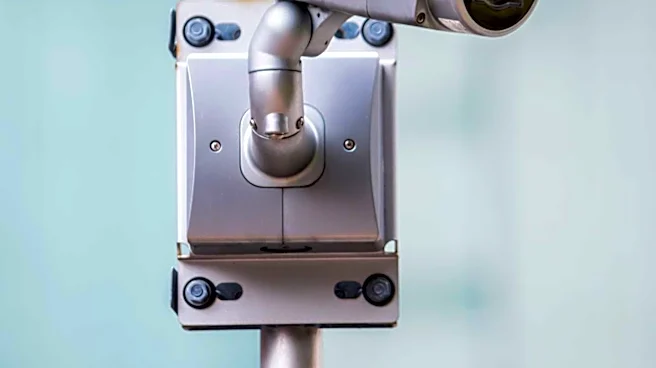
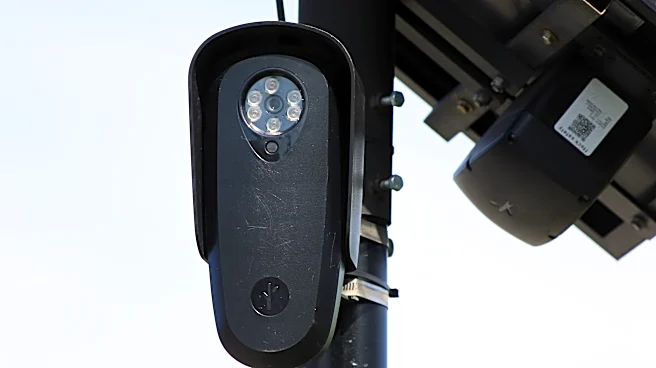
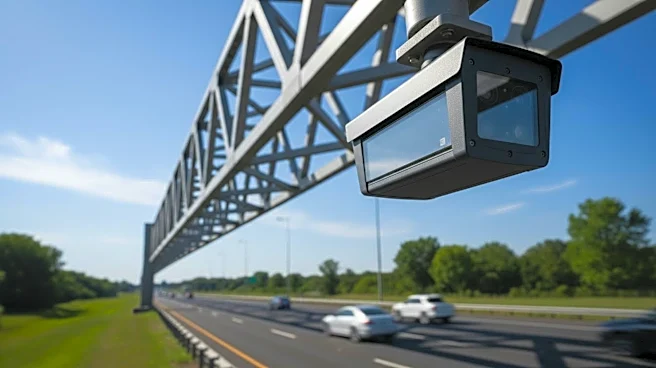
expansion of AI-powered surveillance systems like Automated License Plate Readers (ALPRs), often referred to as Flock cameras. These modern ALPR networks can identify vehicles not only by their license plates but also by make, model, color, and other distinguishing characteristics. Combined with sophisticated analytics, these systems can reveal patterns of movement, identify personal associations, and reconstruct detailed accounts of an individual’s daily life. Critics argue that this indiscriminate collection of data on millions of innocent Americans constitutes mass surveillance, fundamentally altering the relationship between citizens and the government. While these systems have aided law enforcement in solving crimes, the core concern is their ability to collect information broadly rather than selectively, potentially infringing upon constitutional protections.
Why It's Important?
The widespread deployment of AI-powered surveillance systems like ALPRs has profound implications for constitutional freedoms, particularly the Fourth Amendment. The ability of these systems to chronicle the lives of innocent Americans, tracking their movements and associations, challenges the principle that free people should not live under constant observation. This shift from traditional policing, which begins with evidence pointing to a suspect, to mass surveillance, which gathers information about everyone first, represents a fundamental change in how law enforcement operates. The argument that 'if you’ve done nothing wrong, you have nothing to hide' is dismissed as undermining the constitutional protections intended for all citizens, not just those accused of crimes. The concern extends to the potential for these systems to create a de facto national tracking system without explicit authorization, impacting privacy in areas such as worship, political affiliation, medical visits, and personal relationships.
What's Next?
The ongoing debate surrounding AI-powered surveillance necessitates legislative action at both federal and state levels. There is a call for Congress and state legislatures to establish clear limits on how location data is collected, used, retained, shared, and sold. The focus should be on ensuring these technologies are used for legitimate criminal investigations rather than routine surveillance. Furthermore, Congress is urged to prevent federal agencies from using state or privately operated surveillance networks to circumvent constitutional protections. While some companies, like the maker of Flock cameras, have announced voluntary changes to address privacy concerns, these are seen as insufficient, as they are not industry-wide and do not address the fundamental issue of warrantless mass surveillance. The choices made today regarding the regulation of AI and surveillance will shape the balance between liberty and technology for future generations.
Beyond the Headlines
The ethical and legal dimensions of AI-powered surveillance extend beyond immediate privacy concerns, touching upon the very definition of a free society. The indiscriminate collection of data on law-abiding citizens, regardless of who owns or operates the surveillance tools, raises questions about the government's role in monitoring its populace. This technological innovation, if left unchecked, could inadvertently create a society where citizens are constantly under observation, eroding the expectation of privacy that underpins constitutional freedoms. The long-term shift could lead to a normalization of pervasive surveillance, where the movements and activities of individuals are routinely cataloged, potentially chilling free expression and association. The challenge lies in harnessing the benefits of AI for public safety without compromising the fundamental rights and values that define American liberty.