



What's Happening?
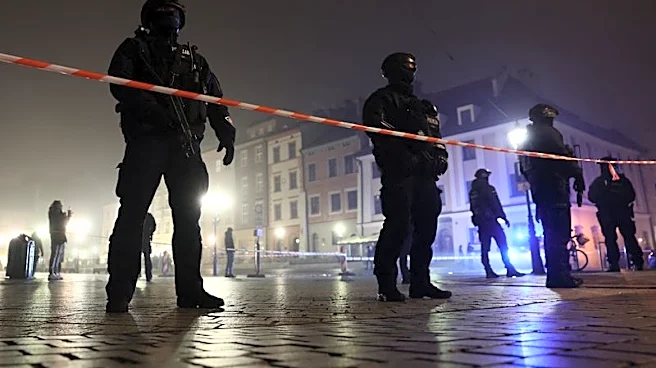
Polish authorities have detained two Ukrainian individuals suspected of engaging in espionage and sabotage activities on behalf of Russian intelligence services. These individuals are accused of carrying out an arson attack on vehicles in a Polish city.
Investigators suggest that the actions of the detained men were intended to 'fuel anti-Ukrainian sentiment' within Poland. Further details regarding the specific targets or the extent of the alleged sabotage operation have not been fully disclosed, but the arrests indicate a concern within Poland about foreign interference and destabilization efforts.
Why It's Important?
The arrests underscore the ongoing geopolitical tensions and the covert operations that extend beyond direct military conflict. If confirmed, these alleged acts of espionage and sabotage by Russian intelligence, utilizing Ukrainian nationals, highlight a strategy to sow discord and undermine support for Ukraine in allied nations like Poland. Poland has been a crucial logistical hub and strong supporter of Ukraine, making it a potential target for such destabilizing activities. The attempt to 'fuel anti-Ukrainian sentiment' could have significant implications for public opinion and political solidarity within Poland, potentially impacting the flow of aid and support to Ukraine. This incident also raises concerns about the vulnerability of European nations to hybrid warfare tactics.
What's Next?
The two Ukrainian individuals remain in detention as Polish authorities continue their investigation into the alleged espionage and sabotage activities. Further details are expected to emerge as the legal process unfolds, potentially revealing more about the scope and nature of the Russian intelligence operation. The incident may prompt increased vigilance and counter-intelligence efforts within Poland and other European countries to prevent similar acts. It could also lead to heightened diplomatic tensions between Poland and Russia, and potentially influence international discussions regarding state-sponsored destabilization efforts.
Beyond the Headlines
This incident points to the complex and often murky landscape of modern conflict, where information warfare and covert operations play a significant role alongside conventional military actions. The alleged use of individuals from a target country (Ukraine) to sow discord in a supporting nation (Poland) against their own country's interests highlights a sophisticated form of manipulation. This tactic aims not only to cause physical damage but also to erode trust, create internal divisions, and weaken international alliances. The broader implication is a challenge to national cohesion and the integrity of democratic processes in countries supporting Ukraine, forcing them to confront threats that are not always visible or easily attributable.