






What's Happening?
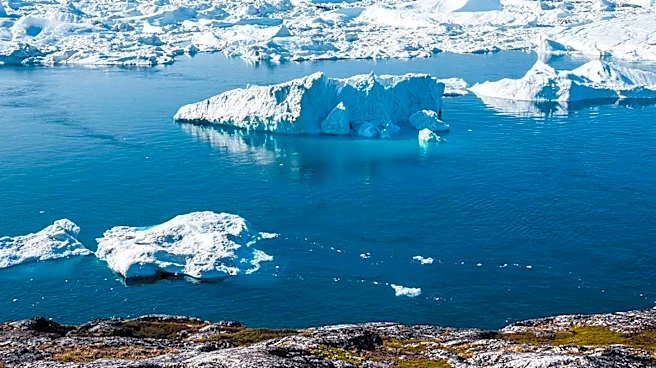
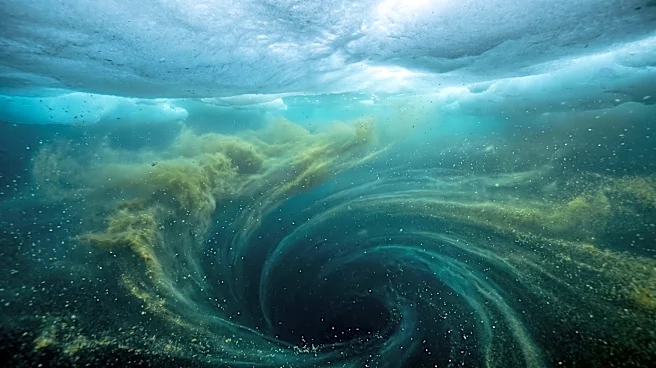
Researchers from Stanford University have discovered that water currents in the Arctic Chukchi Sea significantly speed up the sinking of CO2-carrying phytoplankton. This phenomenon, observed during fieldwork, shows phytoplankton sinking at four times
the usual speed in areas where cold water from beneath the ice meets warmer opposing currents. Typically, phytoplankton in this region sinks at about half a meter per day after blooms peak. The study also found that phytoplankton blooms can be ten times denser in the darker waters beneath thick sea ice compared to open water. Phytoplankton are plant-like organisms that absorb atmospheric CO2 through photosynthesis, and when they sink to the ocean floor, some of this captured carbon can be stored in marine sediments. These findings, published in two papers led by Stanford biological oceanographer Kevin Arrigo, highlight the impact of small-scale ocean currents on CO2 transport and the global carbon cycle. While this accelerated sinking could increase CO2 uptake and storage in Arctic sediments, further research is needed to confirm this, as factors like melting ice could create freshwater layers that prevent nutrient-rich waters from reaching phytoplankton.
Why It's Important?
This research is important because it sheds light on a previously underestimated mechanism for carbon sequestration in the Arctic, a region warming at an accelerated rate. The enhanced sinking of phytoplankton could mean that more atmospheric CO2 is being removed and stored in deep ocean sediments, potentially influencing global carbon budgets. Understanding these processes is crucial for accurately modeling the ocean's role in the global carbon cycle and predicting future climate scenarios. Furthermore, phytoplankton forms the base of marine food chains, so changes in its sinking rate and distribution could have significant implications for marine ecosystems. A faster sinking rate might deliver more organic material to deep-sea organisms but could reduce food availability for species near the surface. This could lead to shifts in marine food webs and impact the biodiversity and productivity of Arctic waters. The findings emphasize the need to consider small-scale ocean physics when assessing the broader carbon cycle and its interaction with climate change.
What's Next?
Future research will focus on confirming whether this accelerated phytoplankton sinking indeed leads to increased CO2 uptake and storage in Arctic sediments. Scientists will need to investigate the interplay between these currents and other environmental factors, such as melting ice, which could introduce layers of warmer freshwater. These freshwater layers might prevent nutrient-rich deeper waters from mixing and reaching phytoplankton, potentially limiting their growth and carbon absorption capacity. The insights gained will be vital for refining climate models and improving predictions of how ocean carbon storage and marine food webs will respond to ongoing climate change. The research also suggests that similar small-scale ocean current phenomena might exist in other parts of the world's oceans, warranting further investigation to fully understand their global impact on carbon transport and marine ecosystems. Continued monitoring and modeling efforts will be essential to integrate these findings into broader climate assessments and inform conservation strategies for the Arctic.
Beyond the Headlines
The discovery of accelerated phytoplankton sinking due to specific Arctic currents highlights the complex and often localized nature of climate feedback loops. While the immediate implication might seem positive for carbon sequestration, the broader ecological consequences are multifaceted. The potential for reduced food availability for surface-feeding species could trigger cascading effects throughout the Arctic marine food web, impacting everything from zooplankton to larger marine mammals and birds. This underscores the delicate balance of these ecosystems and how seemingly beneficial processes for carbon removal can have unforeseen ecological trade-offs. Moreover, the rapid warming of the Arctic, which is four times the global average, introduces further uncertainties. The interaction between these currents, melting ice, and changing ocean stratification could lead to dynamic and unpredictable shifts in the region's carbon cycle and marine life, emphasizing the need for holistic and interdisciplinary approaches to climate research and conservation.