







What's Happening?
Europe is experiencing increasingly frequent and severe forest fires, driven by climate change, land-use shifts, and forest management practices. These fires result in significant economic losses, estimated at EUR 2.5 billion annually in the EU, alongside
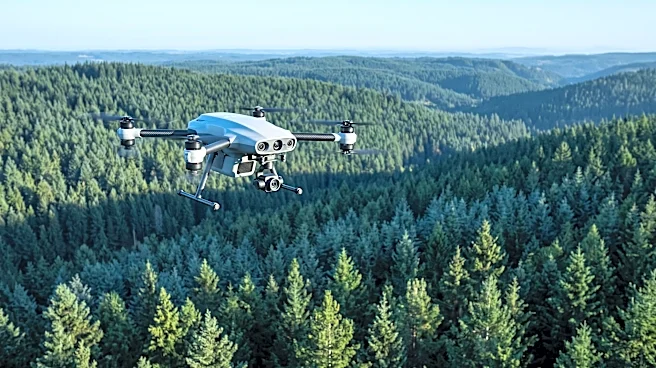
property destruction and increased healthcare costs. Traditional, reactive fire management approaches are proving insufficient for the scale and complexity of contemporary events. In response, the EU-funded SILVANUS project has developed a climate-resilient forest management platform. This platform integrates 21 interoperable products covering fire prevention, preparedness, detection, response, and post-fire restoration. It utilizes remote sensing, communication, modeling, decision support, and citizen engagement components, bringing together technologies such as internet-linked fire detectors, autonomous drones, robotics, data analytics, and AI-powered fire modeling.
Why It's Important?
The SILVANUS project's innovations are crucial for enhancing wildfire management capabilities not only in Europe but also globally. By offering a comprehensive suite of tools, the project addresses the multidimensional challenge of wildfires, which extends beyond initial detection to include predictive modeling, resource allocation, and citizen involvement. The economic impact of wildfires, including property damage and healthcare costs, underscores the necessity of such advanced solutions. The project's emphasis on a cross-sectoral governance model, involving governments, research institutions, emergency services, and civil society, highlights the importance of collaborative efforts in tackling complex environmental issues. The successful validation of the system through 12 pilots across 11 countries demonstrates its potential for international scalability and export, positioning European technology as a leader in wildfire resilience.
What's Next?
The SILVANUS consortium is currently developing a market exploitation strategy to promote the industrial adoption of its technologies. Given its modular and interoperable architecture, individual components of the platform, such as sensing, modeling, decision support, training, and citizen engagement, can be adapted for other applications, including floods, industrial emergencies, and ecosystem monitoring. Several project partners are already transforming SILVANUS results into durable products and follow-on projects worldwide, indicating a strong potential for the technology to expand into new sectors and markets. The project's contributions to policy recommendations, such as those for the European Commission's integrated wildfire risk management, suggest that its scientific advancements will continue to influence future environmental policies and practices.
Beyond the Headlines
The SILVANUS project represents a significant step in leveraging advanced technology and interdisciplinary collaboration to combat the escalating threat of wildfires. Beyond its immediate applications, the project's success could catalyze further innovation in climate adaptation technologies and foster greater international cooperation in environmental management. The integration of citizen engagement components, such as public advice apps and fire reporting features, underscores the growing recognition of community involvement as a critical element in disaster preparedness. This approach could lead to a more informed and resilient populace, capable of actively participating in environmental protection. Furthermore, the project's focus on translating scientific research into concrete policy recommendations highlights the increasing demand for evidence-based decision-making in addressing global environmental challenges, potentially setting a precedent for future climate-related initiatives.